Introduction to MXDFz4.4
In the vast tapestry of the universe's history, the Era of Reionization stands as a pivotal chapter. This epoch, occurring roughly 1.4 billion years after the Big Bang, saw the universe transform from an opaque fog of neutral hydrogen into a transparent cosmos. At the heart of this transformation are galaxies like MXDFz4.4, a tiny yet powerful entity that has captured the attention of astronomers using the Hubble Space Telescope, the James Webb Space Telescope (JWST), and the European Southern Observatory's Very Large Telescope (ESO VLT).
The Compact Nature of MXDFz4.4
MXDFz4.4 is a galaxy of modest size, yet it packs a significant punch in terms of its contribution to the reionization process. Its compactness is a defining feature, allowing it to concentrate its star-forming activities in a small volume. This intense star formation is crucial because it generates the ionizing photons necessary to clear the cosmic fog of neutral hydrogen that pervaded the early universe.
Star Formation and Ionizing Photons
Despite its diminutive size, MXDFz4.4 exhibits a rapid rate of star formation. This activity is essential for producing the high-energy photons that can ionize hydrogen atoms. The galaxy's ability to let these photons escape into the intergalactic medium is particularly noteworthy. Scientists estimate that MXDFz4.4 has a high ionizing-photon escape fraction, meaning a significant portion of these photons are not absorbed within the galaxy but instead contribute to reionizing the universe.
Clearing the Cosmic Fog
The role of MXDFz4.4 in the Era of Reionization is emblematic of how early galaxies helped clear the universe's cosmic fog. By allowing ionizing photons to escape, galaxies like MXDFz4.4 were instrumental in transforming the universe from a dark, opaque state into the transparent expanse we observe today. This process is crucial for understanding the evolution of the cosmos and the formation of structures within it.
Observations and Insights
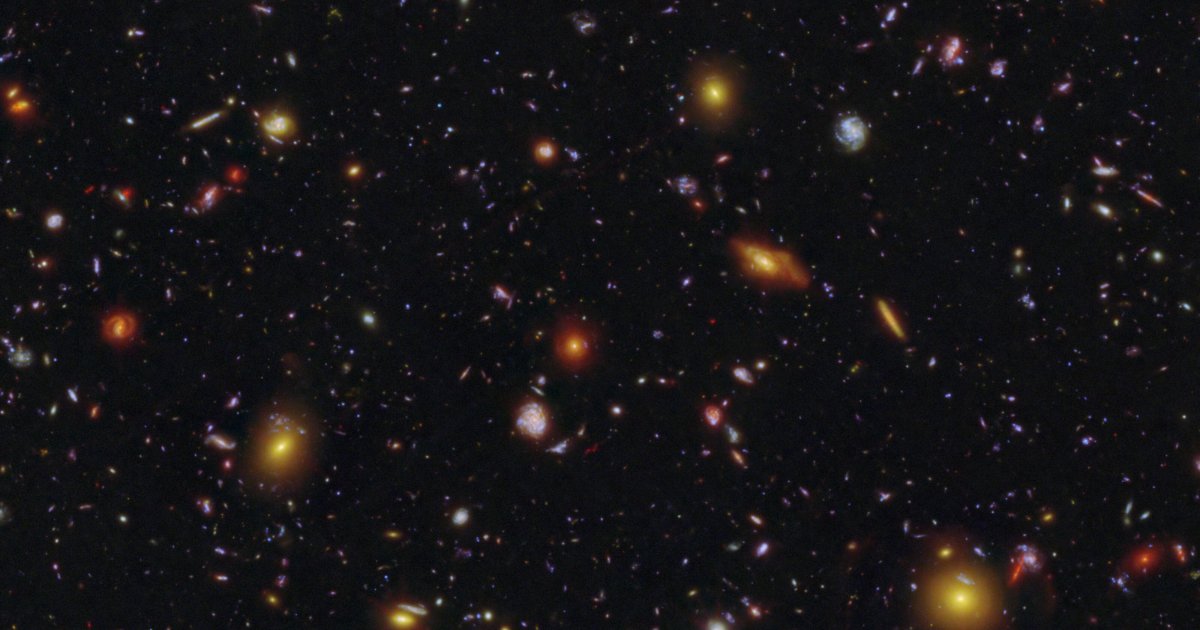
The observations of MXDFz4.4 were made possible through the combined efforts of the Hubble Space Telescope, JWST's Near Infrared Camera (NIRCam), and ESO's VLT Multi Unit Spectroscopic Explorer (MUSE). These instruments provided a detailed view of the galaxy's characteristics, offering insights into its star formation rate, structure, and the mechanisms allowing photon escape. Such data are invaluable for piecing together the timeline and processes of reionization.
According to NASA, these observations not only highlight the capabilities of these advanced telescopes but also underscore the importance of small galaxies in the early universe. They were the unsung heroes of reionization, working silently yet effectively to change the cosmic landscape.
Implications for Cosmology
The study of MXDFz4.4 and similar galaxies provides critical insights into the nature of the early universe. Understanding how these galaxies contributed to reionization helps astronomers refine models of cosmic evolution and the formation of large-scale structures. Moreover, it sheds light on the conditions necessary for galaxy formation and the subsequent emergence of stars and planets.
As researchers continue to analyze data from Hubble, JWST, and ESO's VLT, the story of MXDFz4.4 and its peers will become clearer, offering a more detailed picture of the universe's formative years. These findings will not only enhance our understanding of the past but also inform future explorations of the cosmos.