Final Prelaunch Milestones
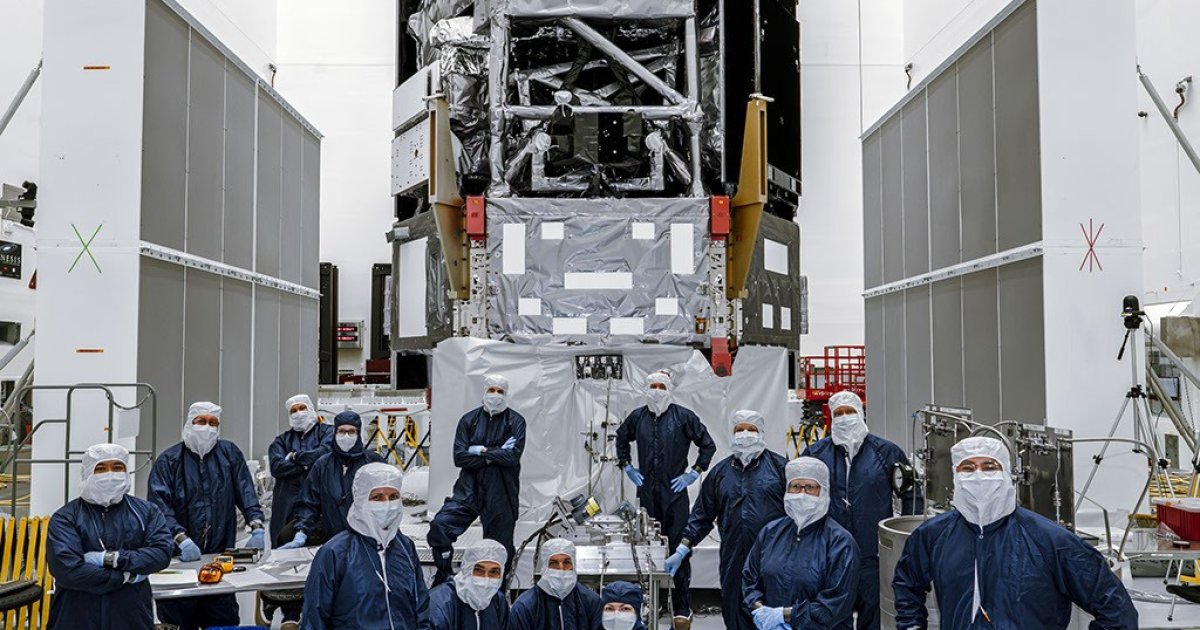
NASA's Roman Space Telescope, a groundbreaking mission designed to explore the mysteries of dark energy and exoplanets, is on track for its scheduled launch on August 30, 2026. The spacecraft was fully fueled on July 25, 2026, at Kennedy Space Center, marking a significant milestone in its prelaunch preparations. This early fueling, nine months ahead of schedule, underscores the meticulous planning and execution involved in readying the telescope for its journey.
Fueling and Integration
The fueling process is a critical step in the launch preparation of any space mission. For the Roman Space Telescope, this involved loading the spacecraft with the necessary propellants that will power its journey to the Sun-Earth L2 point, a gravitationally stable location approximately one million miles from Earth. This location is ideal for its wide-field infrared surveys, as it provides a stable environment with minimal interference from Earth's atmosphere or magnetic field.
Following fueling, the next major step is the integration of the telescope with the SpaceX Falcon Heavy rocket. This process involves carefully mounting the telescope onto the rocket's payload adapter, ensuring all connections are secure and systems are functioning correctly. The integration is a delicate operation, requiring precision and coordination among various teams to ensure the telescope's safety and functionality during launch.
Payload Fairing
Once integrated, the Roman Space Telescope will be encapsulated within the payload fairing of the Falcon Heavy. The fairing is a protective shell that shields the telescope from aerodynamic forces and environmental conditions during ascent. This step is crucial to ensure the telescope remains undamaged as it travels through Earth's atmosphere and into space.
Scientific Mission at Sun-Earth L2
The Roman Space Telescope's mission is ambitious and multifaceted, aiming to address some of the most profound questions in astrophysics. Positioned at the Sun-Earth L2 point, the telescope will conduct a wide-field infrared survey, offering unprecedented insights into the universe's structure and evolution.
Exploring Dark Energy
One of the primary objectives of the Roman Space Telescope is to investigate dark energy, the mysterious force driving the accelerated expansion of the universe. By observing distant supernovae and galaxies, the telescope will help scientists refine models of cosmic expansion and improve our understanding of dark energy's role in the universe.
Exoplanet Microlensing
In addition to its dark energy studies, the Roman Space Telescope will utilize a technique known as gravitational microlensing to discover and characterize exoplanets. This method involves detecting the light from a distant star that is temporarily magnified by the gravitational field of a planet passing in front of it. Scientists estimate that Roman's survey could potentially identify thousands of new exoplanets, including those in the habitable zones of their stars.
Infrared Astrophysics
The telescope's wide-field infrared capabilities will also enable it to study a variety of astrophysical phenomena. From mapping the cosmic web to exploring the formation of stars and galaxies, the Roman Space Telescope will provide valuable data that could reshape our understanding of the universe. Its infrared observations will penetrate dust clouds that obscure many celestial objects, revealing details that are invisible in other wavelengths.
For more detailed information about the mission, visit NASA's Roman Space Telescope page.