Roman Space Telescope Tracker
NASA's next flagship - a 2.4-meter wide-field infrared observatory built to map dark energy, hunt exoplanets, and image a billion galaxies. Launching 30 August 2026 at 07:26 EDT.
PRE-LAUNCH — Time to Launch Roman is Operational
Welcome to the Nancy Grace Roman Space Telescope tracker - your dashboard for NASA's next astrophysics flagship. This Roman tracker features a real-time launch countdown, science instrument profiles, mission timeline, and the latest mission updates. Whether you call it the Roman telescope, the Roman observatory, or by its former name WFIRST, you'll find everything you need to follow NASA's wide-field infrared survey from launch through years of dark-energy and exoplanet science.
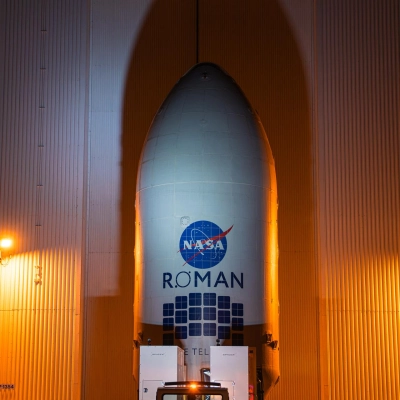
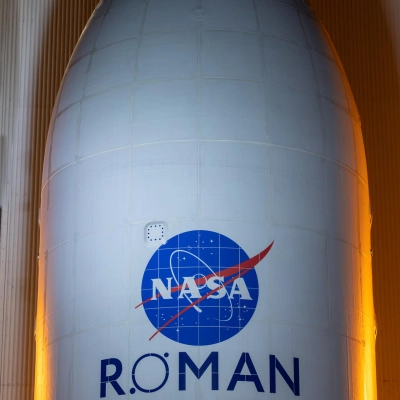
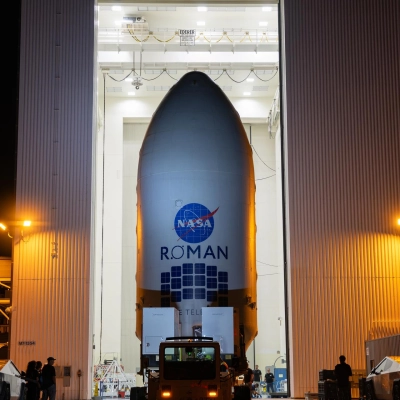
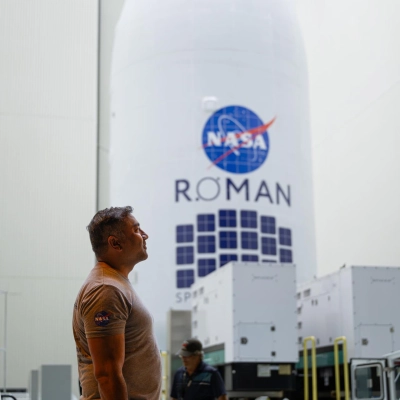
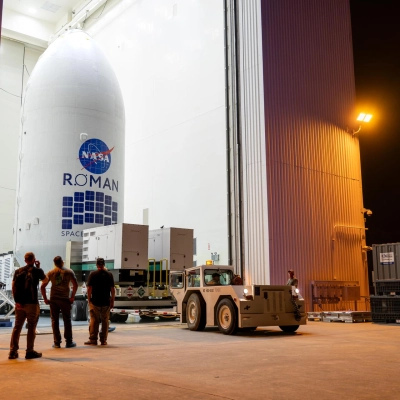
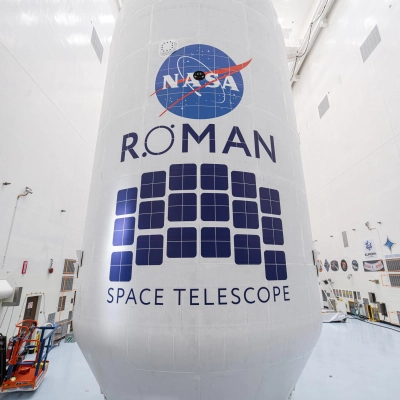
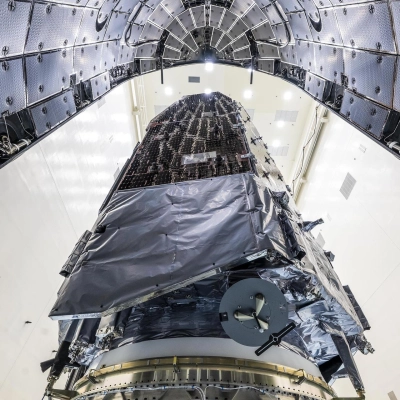
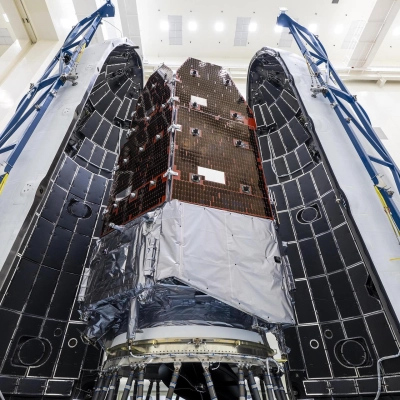
Roman Mission Gallery
Latest images from the Nancy Grace Roman Space Telescope mission
Mission at a Glance
Science Instruments
Roman carries two precision instruments that share its 2.4-meter primary mirror, working together to deliver wide-field infrared surveys and direct exoplanet imaging.
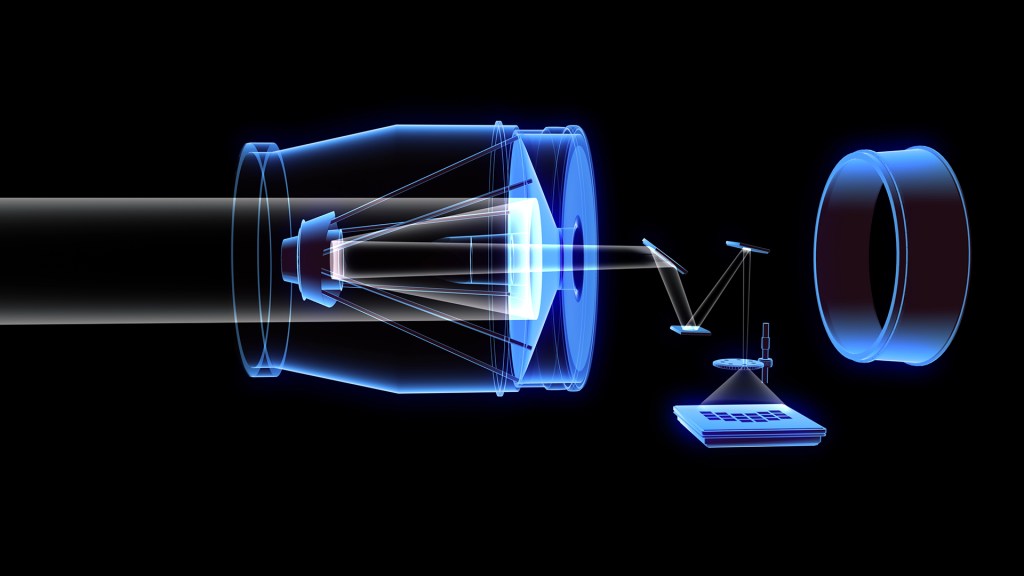
WFI
🇺🇸 NASA Goddard
A 300-megapixel near-infrared camera covering a field of view at least 100x larger than Hubble - Roman's primary survey instrument for dark energy, microlensing, and the high-latitude sky.
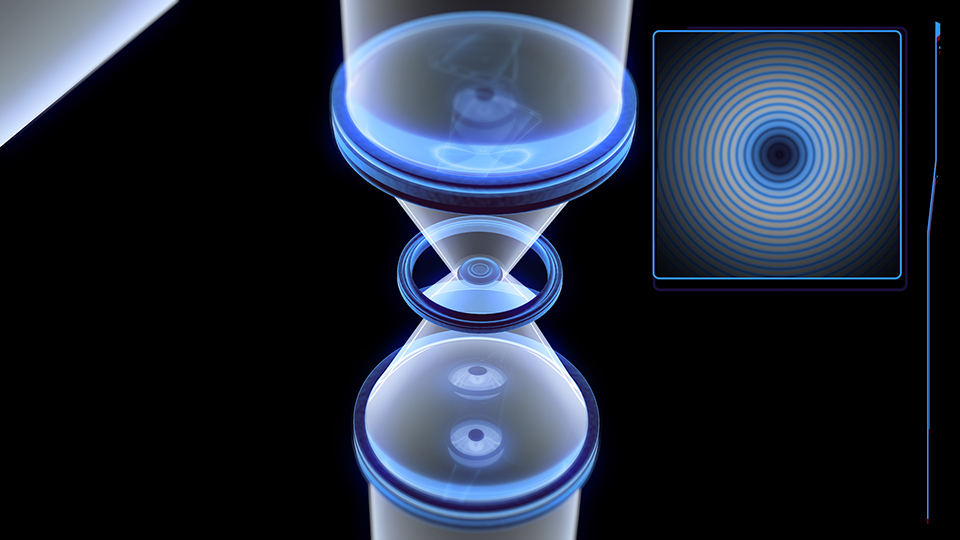
CGI
🇺🇸 NASA JPL
A high-contrast coronagraph technology demonstrator that suppresses starlight by a billion times, designed to directly image mature giant exoplanets and debris disks for the first time.
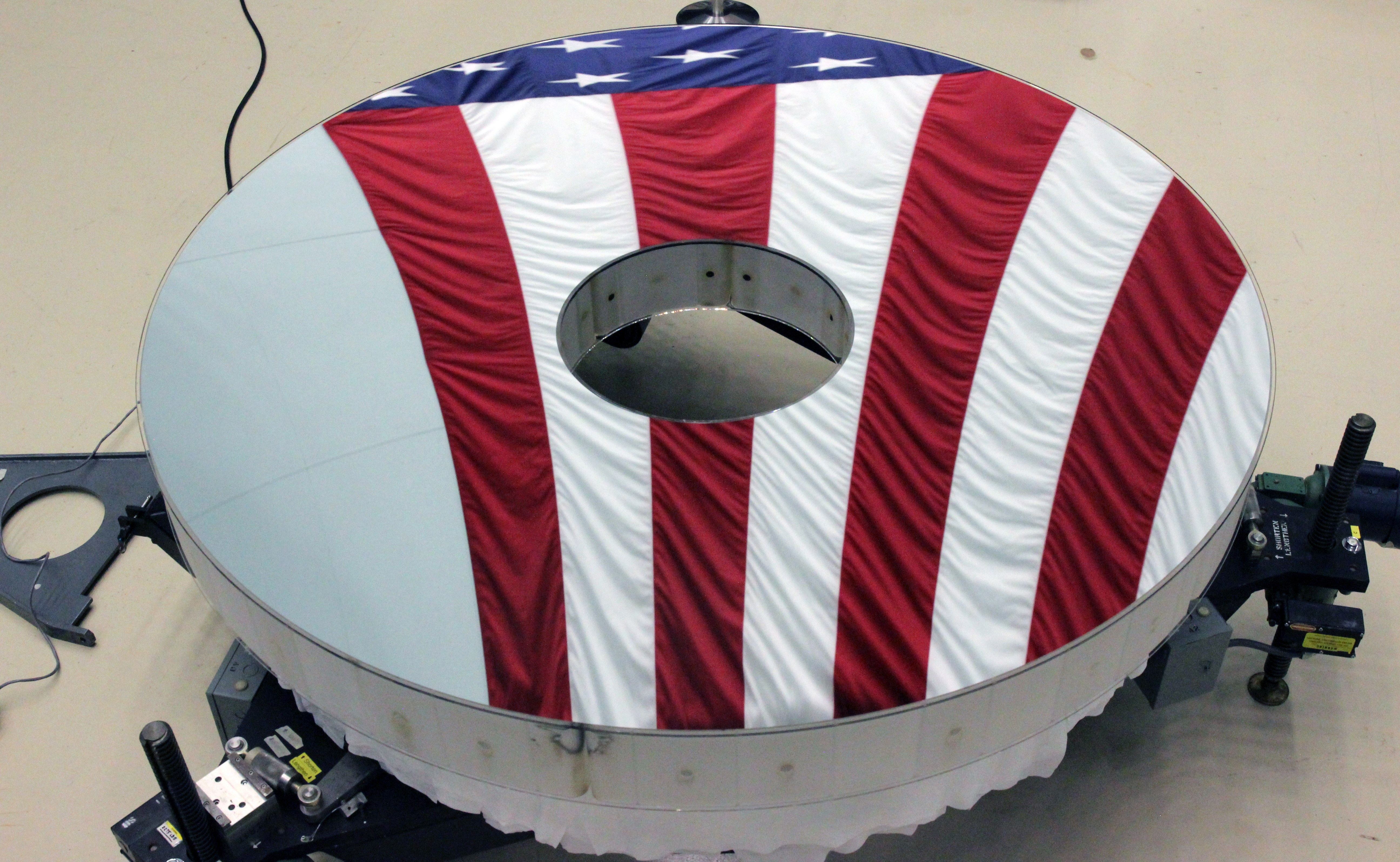
HRMA
🇺🇸 Repurposed NRO Asset
A 2.4-meter primary mirror, identical in size to Hubble's, donated to NASA by the National Reconnaissance Office and re-engineered for wide-field infrared survey science.
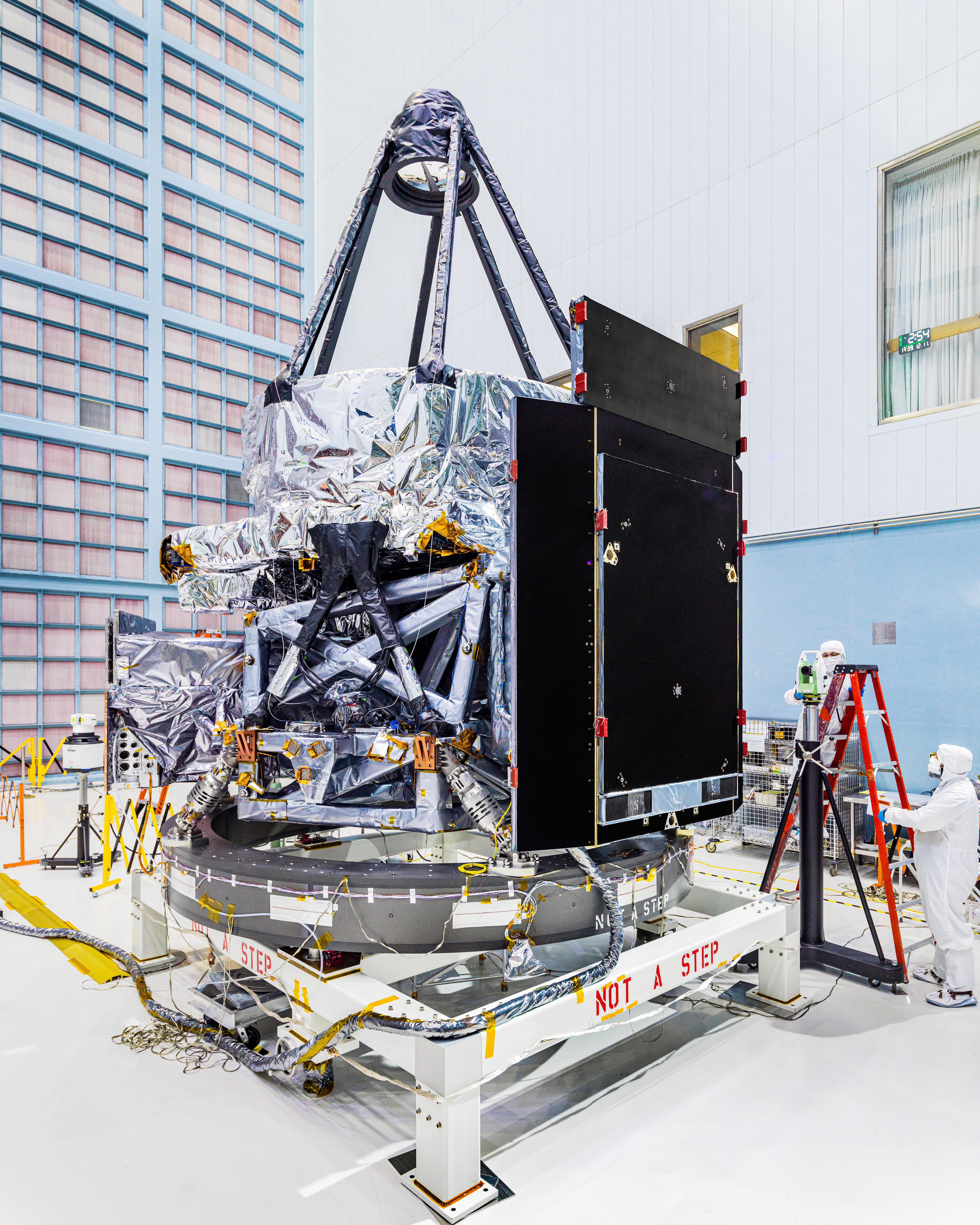
Spacecraft Bus
🇺🇸 NASA Goddard
The integrated spacecraft and outer barrel assembly stabilize Roman to milli-arcsecond precision and shield the instruments from stray light during long survey exposures at Sun-Earth L2.
Mission Timeline
From the WFIRST concept to launch readiness - Roman's major development milestones.
WFIRST Concept
The Astro2010 Decadal Survey ranks a wide-field infrared survey telescope as its top priority for NASA, launching the WFIRST concept that becomes Roman.
NRO Mirror Donation
The National Reconnaissance Office donates two 2.4-meter telescope assets to NASA, dramatically upgrading WFIRST's capabilities at no cost to the mission.
Renamed for Nancy Grace Roman
NASA officially renames WFIRST after Nancy Grace Roman, the agency's first Chief Astronomer and the "mother of Hubble" who advocated for an orbiting space telescope.
Critical Design Review
The mission passes its Critical Design Review, clearing Roman to enter full hardware fabrication and integration of the instruments and spacecraft bus.
Key Decision Point D
Roman passes KDP-D in September 2024, the agency milestone confirming the mission is ready to begin system integration and environmental testing.
Integration & Test
Wide Field Instrument, Coronagraph, and the Optical Telescope Assembly converge at Goddard for full observatory integration, environmental testing, and end-to-end verification.
Launch Window
Roman launches on a SpaceX Falcon Heavy from Launch Complex 39A at Kennedy Space Center on 30 August 2026 at 07:26 EDT, beginning a five-year primary mission at Sun-Earth L2.
What Roman Will Achieve
Roman is engineered to deliver scientific firsts no previous space telescope could attempt.
A Billion Galaxies Imaged
Roman's wide-field surveys are designed to measure light from a billion galaxies across cosmic time - the largest space-based galaxy census ever attempted.
100× Hubble's Field of View
With the same 2.4-meter mirror as Hubble but a wide-field instrument, Roman captures more than 100 times more sky per pointing at the same Hubble-class resolution.
Dark Energy Pinned Down
Roman will measure how dark energy has shaped the expansion of the universe by mapping baryon acoustic oscillations, weak lensing, and Type Ia supernovae over billions of years.
Microlensing Exoplanet Census
A dedicated bulge survey will discover thousands of cold exoplanets through microlensing - completing Kepler's census toward planets orbiting far from their stars.
First Direct Imaging of Mature Exoplanets
The Coronagraph Instrument is a technology demonstrator targeted at directly imaging mature gas giants - a billion times fainter than their host stars.
About Wide-Field Infrared Surveys
Why Roman is built differently than Hubble or Webb - and what it sees that they cannot.
Wide-Field, Not Deep-Field
Where Hubble and Webb stare deeply at small patches of sky, Roman is a survey telescope - it sweeps huge areas of sky at high resolution to capture statistical samples of millions of galaxies and stars.
Near-Infrared Vision
Roman observes from 0.5 to 2.3 micrometers, where redshifted light from distant galaxies and the dust-piercing glow of cold exoplanets and stellar nurseries can be cleanly measured.
Sun-Earth L2 Orbit
Roman will operate at the second Sun-Earth Lagrange point, 1.5 million km from Earth, where it can observe stably with the Sun, Earth, and Moon all conveniently behind a sunshield.
Synergy with JWST and Hubble
Roman's wide-field maps identify the rare and interesting targets that JWST then studies in detail, and Hubble cross-calibrates Roman's photometry, giving astronomers a complete multi-wavelength toolkit.
Roman vs Hubble vs JWST
Side-by-side specifications for NASA's three flagship space telescopes - what each is built for and why they complement rather than replace each other.
| Specification | Roman | Hubble | JWST |
|---|---|---|---|
| Primary mirror diameter | 2.4 meters | 2.4 meters | 6.5 meters (segmented) |
| Field of view | ~100x larger than Hubble (0.28 sq deg) | Baseline (1x) | ~0.7x of Hubble (NIRCam) |
| Wavelength range | 0.5 - 2.3 micrometers (visible to near-IR) | 0.1 - 1.7 micrometers (UV, visible, near-IR) | 0.6 - 28 micrometers (near-IR to mid-IR) |
| Orbit | Sun-Earth L2 (1.5 million km) | Low Earth orbit (540 km) | Sun-Earth L2 (1.5 million km) |
| Primary survey type | Wide-field statistical surveys | Targeted observations | Targeted deep-field IR |
| Launch | 30 August 2026 (Falcon Heavy) | 24 April 1990 (Space Shuttle) | 25 December 2021 (Ariane 5) |
| Lead organizations | NASA Goddard, STScI, IPAC | NASA / ESA, STScI | NASA / ESA / CSA, STScI |
| Servicing | Not designed for servicing | 5 Space Shuttle servicing missions | Not designed for servicing |
| Primary mission length | 5 years (10+ year design margin) | 15 years (still operating after 35) | 5 years (20+ year fuel margin) |
Roman complements Hubble and JWST rather than replacing either. Roman maps huge areas of sky to find rare or interesting targets; JWST follows up on the most compelling ones in spectroscopic detail; Hubble continues the UV and optical work neither of the others can do.
Mapping Dark Energy & Hunting Worlds
Roman's primary science goals
The Nancy Grace Roman Space Telescope is built around three Decadal Survey priorities: pinning down the nature of dark energy through massive cosmological surveys, completing the census of exoplanets through microlensing and direct imaging, and surveying the infrared universe at Hubble resolution across enormous swaths of sky. By delivering data to thousands of astronomers worldwide and serving as a wide-field counterpart to JWST and Hubble, Roman will reshape what we know about the cosmos for decades to come.
Frequently Asked Questions
Everything you need to know about NASA's Nancy Grace Roman Space Telescope.
results found
Roman is NASA's next major astrophysics flagship - a 2.4-meter wide-field infrared survey telescope designed to investigate dark energy, complete the exoplanet census, and survey the infrared sky at Hubble resolution across enormous areas. It is the highest-priority mission from the 2010 Astro2010 Decadal Survey and builds on hardware donated to NASA by the National Reconnaissance Office.
Roman is set to launch on 30 August 2026 at 07:26 am EDT (11:26 UTC) - eight months ahead of the original May 2027 commitment. The mission will fly on a SpaceX Falcon Heavy rocket from Launch Complex 39A at Kennedy Space Center and travel to Sun-Earth L2, with science operations expected to begin in early 2027 after roughly 90 days of commissioning.
Nancy Grace Roman (1925-2018) was NASA's first Chief of Astronomy and the agency's first female executive. She is widely known as the "mother of Hubble" for shepherding the project that became the Hubble Space Telescope through Congress and into reality. NASA renamed the WFIRST mission after her in May 2020.
Roman is led by NASA's Goddard Space Flight Center in Maryland, which also builds the spacecraft bus and the Wide Field Instrument. The Coronagraph Instrument is contributed by NASA JPL with international partners. Science operations will be conducted by the Space Telescope Science Institute (STScI) in Baltimore alongside Caltech/IPAC.
Roman complements them rather than replacing them. Hubble does ultraviolet and visible imaging, JWST is the deep-field infrared workhorse, and Roman is the wide-field infrared survey machine. The three observatories will operate together: Roman maps huge areas to find rare objects, JWST follows up on the most interesting targets in detail, and Hubble continues UV and optical work.
In May 2020, NASA renamed the Wide Field Infrared Survey Telescope (WFIRST) the Nancy Grace Roman Space Telescope to honor Nancy Roman's pioneering role in establishing the case for space-based observatories. Roman herself spent decades advocating for what would eventually become Hubble - and the new mission carries forward that legacy.
Roman carries two science instruments behind its 2.4-meter optics: the Wide Field Instrument (WFI), a 300-megapixel near-infrared camera with a field of view at least 100 times larger than Hubble, and the Coronagraph Instrument (CGI), a high-contrast technology demonstrator designed to directly image mature exoplanets.
The Wide Field Instrument (WFI) is Roman's primary survey camera. It uses 18 large near-infrared detectors covering 0.28 square degrees - more than 100 times Hubble's field of view - across wavelengths from 0.5 to 2.3 micrometers. WFI executes Roman's flagship surveys for dark energy, microlensing, and the high-latitude infrared sky.
The Coronagraph Instrument (CGI) is a high-contrast imaging technology demonstrator built to suppress starlight by a factor of a billion or more. It uses deformable mirrors and precision wavefront control to reveal mature gas giant exoplanets and debris disks - paving the way for future direct-imaging missions like the Habitable Worlds Observatory.
Roman's primary mirror is 2.4 meters in diameter - the same size as Hubble's. The mirror was donated to NASA by the National Reconnaissance Office in 2012 along with another identical asset, dramatically improving the WFIRST design at minimal cost. Roman pairs that Hubble-class mirror with a vastly larger detector array.
Light from distant galaxies is redshifted by the expansion of the universe, stretching it from visible into infrared wavelengths. Cold objects like exoplanets and brown dwarfs also emit primarily in infrared. By surveying infrared light at Hubble resolution, Roman can study cosmic objects that are simply invisible to optical telescopes.
Roman will operate at the second Sun-Earth Lagrange point (L2) - a gravitationally stable region about 1.5 million kilometers from Earth, on the opposite side from the Sun. JWST is also at L2. The orbit allows Roman to keep the Sun, Earth, and Moon all behind its sunshield, providing thermally stable conditions for long survey exposures.
Roman has a planned five-year primary mission with consumables and design margins targeted for at least ten years of operations. Like Hubble and Webb, the actual lifetime is expected to depend on hardware health and continued science productivity rather than a hard mission cap.
Roman will downlink data through NASA's Deep Space Network, with daily contacts moving science observations from onboard storage to the Space Telescope Science Institute and IPAC archive. With its huge survey rate, Roman will be one of the highest-data-volume astrophysics missions ever flown.
Yes. Most of Roman's core community surveys will have no proprietary period - data will flow into the public archive almost immediately. This is a deliberate choice to maximize scientific return and let the broader astronomy community build on Roman's observations from day one.
Day-to-day science operations are managed jointly by the Space Telescope Science Institute (STScI) in Baltimore - which also runs Hubble and JWST - and the IPAC Science Center at Caltech, which handles much of the survey data processing. NASA Goddard remains responsible for spacecraft operations and overall project management.
Roman will use three independent dark energy probes: weak gravitational lensing, baryon acoustic oscillations from galaxy clustering, and Type Ia supernova distance measurements. Combining all three across billions of years of cosmic time will sharply constrain whether dark energy is a cosmological constant or evolves with time.
Roman has two exoplanet techniques. The galactic bulge microlensing survey will discover thousands of cold exoplanets - including free-floating worlds - by watching for brief stellar flickers. The Coronagraph Instrument will directly image mature giant exoplanets and debris disks, technology that future missions need for finding Earth analogs.
Microlensing happens when a foreground star's gravity briefly magnifies a background star, and any planets orbiting the foreground star produce additional dips and bumps in the brightness curve. Roman's microlensing survey is designed to detect thousands of such events and complete the exoplanet census for planets orbiting far from their host stars.
Yes. Roman's High Latitude Wide Area Survey will map about 2,000 square degrees of sky to depths comparable to Hubble's deepest fields - delivering tens of millions of galaxies for studies of cosmic structure, galaxy evolution, and the relationship between visible matter and dark matter.
Roman is one of the most powerful transient discovery machines ever built. Its supernova survey will repeatedly image the same fields to detect Type Ia supernovae for cosmology, and the same data will yield tidal disruption events, kilonovae, and other rare transients - especially when paired with observatories like Rubin and JWST.
Roman is roughly the size of a school bus - around 7.4 meters tall and 4.4 meters wide with its outer barrel assembly. The observatory is built around the 2.4-meter primary mirror with a deployable sunshield and large solar arrays sized for L2 operations. It will fly on a SpaceX Falcon Heavy.
NASA selected SpaceX Falcon Heavy as Roman's launch vehicle, with launch from Kennedy Space Center. Falcon Heavy provides the lift capacity needed to send the observatory to Sun-Earth L2 with margin for the spacecraft's deployment hardware.
Roman is powered by deployable solar arrays optimized for the constant sunlight available at L2. Onboard batteries cover any brief periods of attitude maneuvers, and Roman's thermal design uses a deployable sunshield with a fixed solar array assembly to keep its instruments cold and stable.
No. Roman, like JWST, will operate at Sun-Earth L2 - far beyond the reach of any current crewed spacecraft. The mission is designed for fully autonomous operations, though NASA has ensured the spacecraft has interfaces compatible with future robotic servicing missions if that capability matures.
NASA TV, the agency's YouTube channel, and SpaceX's livestream will all carry Roman's launch from Kennedy Space Center. Coverage is planned for the 30 August 2026 liftoff at 07:26 EDT, and the countdown above tracks the exact launch time.
After launch and commissioning, Roman's observation schedule and survey progress will be public. This Roman tracker page consolidates the latest mission status, image releases, news, and scientific results so you can follow the observatory through commissioning and into full survey operations.
Roman press images will appear on the official NASA Roman page (roman.gsfc.nasa.gov), the Space Telescope Science Institute's outreach channels, and NASA's science portal. Public archive data will be served by both STScI and IPAC.
JWST has a much larger 6.5-meter mirror and a deeper, narrower view - it is built for staring at single targets in detail across mid-infrared wavelengths. Roman has a smaller 2.4-meter mirror but a field of view at least 100 times larger, and observes at near-infrared wavelengths. They are complementary: Roman finds the targets, JWST studies them.
Roman has the same 2.4-meter primary mirror as Hubble - so similar resolution - but a vastly larger focal plane that captures more than 100 times more sky per exposure, optimized for the near-infrared rather than ultraviolet. Where Hubble took thirty years to image a few percent of the sky, Roman will image thousands of square degrees in months.
Vera C. Rubin Observatory is a ground-based optical wide-field survey - Roman is a space-based infrared wide-field survey. They are highly synergistic: Rubin scans the entire southern sky every few nights at optical wavelengths, while Roman provides the near-infrared depth and space resolution needed to follow up on Rubin discoveries and complete the cosmological story.
Roman has three core community surveys: a High Latitude Wide Area Survey for galaxy evolution and weak lensing, a High Latitude Time Domain Survey for supernova cosmology, and a Galactic Bulge Time Domain Survey for microlensing exoplanets. About 25% of observing time is reserved for community-proposed General Astrophysics programs.
Roman fills a gap that no current observatory can - delivering Hubble-class imaging across enormous areas of sky in the infrared. That capability is essential for cosmology, exoplanets, galaxy evolution, and even Solar System science. Roman is also the launching pad for the technology demonstrations needed by future flagships like the Habitable Worlds Observatory.
The official NASA mission portal at roman.gsfc.nasa.gov is the most comprehensive resource - it covers the science, instruments, schedule, and team. Science.nasa.gov's mission pages and the Space Telescope Science Institute (stsci.edu) also publish frequent Roman updates aimed at researchers and the public.
No questions match your search
Try different keywords or
Showing top 5 questions — 34 questions answered about the Nancy Grace Roman Space Telescope
Track Space from Your Phone
Download the James Webb Tracker app to follow the latest Webb telescope images and stay updated on space missions including Roman.