Introduction to Tianwen-2 and Kamo'oalewa
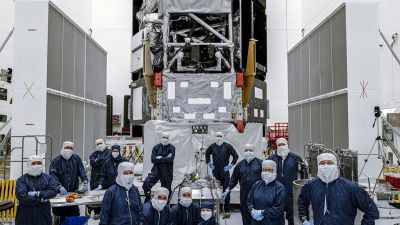
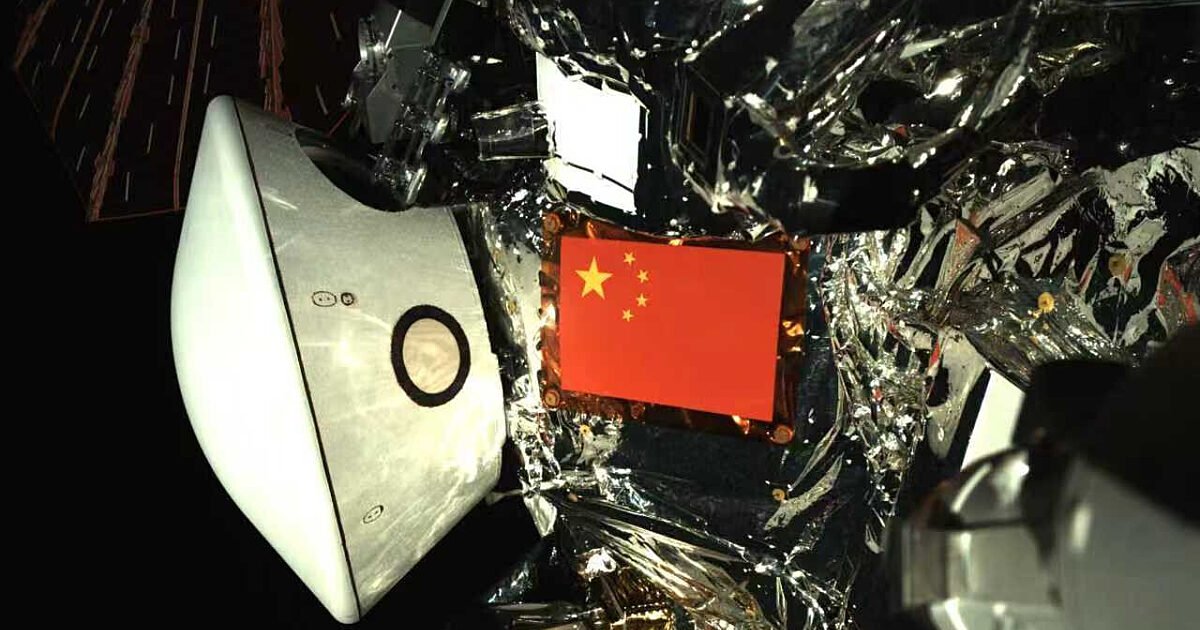
China's ambitious Tianwen-2 mission is set to make a significant mark in space exploration with its planned rendezvous with the quasi-moon asteroid 469219 Kamo'oalewa. This asteroid, which has intrigued scientists due to its unusual orbit and composition, will be the focus of a series of innovative sampling techniques designed to unlock its secrets.
The Rendezvous: June 7, 2026
On June 7, 2026, the Tianwen-2 spacecraft is scheduled to insert itself into orbit around Kamo'oalewa. This maneuver marks a crucial phase in the mission, allowing the spacecraft to closely study the asteroid's surface and prepare for subsequent sampling operations. The orbit-insertion is a complex process that requires precise calculations and adjustments to ensure the spacecraft maintains a stable trajectory around the asteroid.
Close Approach: July 4, 2026
Following the successful orbit insertion, Tianwen-2 will make a daring close approach to Kamo'oalewa on July 4, 2026. During this phase, the spacecraft will come within approximately 20 kilometers of the asteroid's surface. This proximity will enable high-resolution imaging and detailed surface analysis, providing critical data to inform the sampling strategies.
Innovative Sampling Techniques
The Tianwen-2 mission plans to employ three distinct sampling techniques to gather material from Kamo'oalewa. Each method is designed to maximize the scientific return and ensure the collection of diverse samples.
Touch-and-Go
The first technique, touch-and-go, involves a brief contact with the asteroid's surface to collect loose material. This method, similar to NASA's OSIRIS-REx mission, allows for a quick and efficient collection of surface regolith without the need for prolonged contact.
Anchor-and-Attach
The second technique, anchor-and-attach, is more complex. It involves securing the spacecraft to the asteroid's surface, allowing for a more thorough collection of samples. This method could provide insights into the asteroid's subsurface composition, offering clues about its origin.
Hover-and-Arm
The third technique, hover-and-arm, utilizes a robotic arm to reach out and collect samples from specific areas of interest. This targeted approach enables the collection of material from varied locations, potentially uncovering differences in composition across the asteroid's surface.
The Origin Debate: Moon Fragment or Main-Belt Migrant?
One of the most intriguing aspects of Kamo'oalewa is the ongoing debate over its origin. Some scientists estimate that it could be a fragment of the Moon, possibly ejected during a past impact event. Others propose that it might be a migrant from the asteroid belt, captured by Earth's gravity into its current quasi-moon orbit.
The samples collected by Tianwen-2 could provide definitive evidence to resolve this debate. If the samples show similarities to lunar material, it would support the Moon fragment hypothesis. Conversely, a composition more akin to main-belt asteroids would suggest a different origin.
Returning the Samples: What We Might Learn
The samples are expected to return to Earth in 2027, offering a treasure trove of scientific data. Analyzing these samples could reveal the asteroid's age, composition, and history, shedding light on the early solar system's dynamics and the processes that shaped planetary bodies.
Furthermore, understanding Kamo'oalewa's origin could enhance our knowledge of Earth's natural satellites and the potential for similar quasi-moons around other planets.
Conclusion
The Tianwen-2 mission represents a significant step forward in our understanding of near-Earth objects and the complex gravitational interactions that govern their orbits. As China continues to push the boundaries of space exploration, the insights gained from Kamo'oalewa could pave the way for future missions and deepen our understanding of the cosmos.