JWST's Groundbreaking Discovery
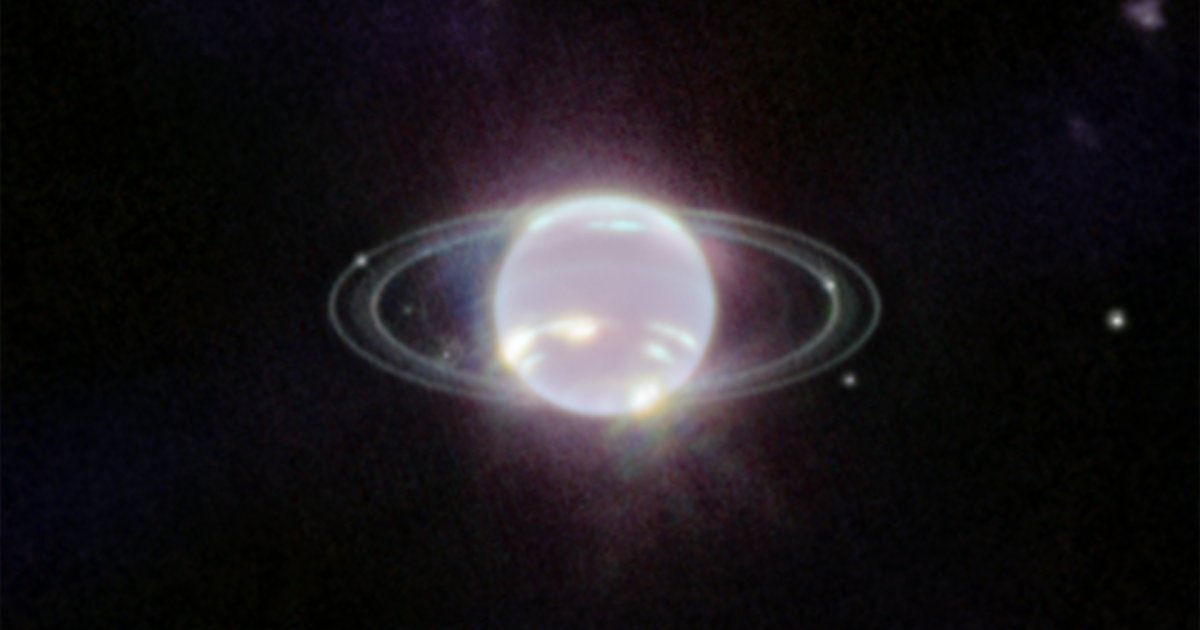
In August 2026, the James Webb Space Telescope (JWST) made a remarkable discovery about Neptune's small inner moons—Larissa, Galatea, and Proteus—as well as its rings. The findings, led by a team from Caltech and published in Science Advances, suggest these celestial bodies contain clay-like hydrated minerals. This composition provides forensic evidence that they are the shattered remnants of larger icy moons, destroyed approximately 4 billion years ago when Neptune's largest moon, Triton, was captured from the Kuiper Belt.
Understanding the Composition
The JWST utilized its advanced spectroscopic capabilities to analyze the light reflected off Neptune's inner moons and rings. The presence of hydrated minerals, including phyllosilicates, indicates a history of water-rock interactions. Such minerals typically form in the presence of liquid water, suggesting that these moons may have once had subsurface oceans or were part of larger bodies with significant water content.
The Role of Triton's Capture
The capture of Triton, a large moon with a retrograde orbit, is believed to have been a cataclysmic event for Neptune's early moon system. Scientists estimate that Triton's gravitational influence could have destabilized the orbits of existing moons, leading to collisions and the eventual fragmentation of these bodies. This theory aligns with the new evidence of hydrated minerals, supporting the idea that Neptune's rings and inner moons are remnants of this ancient destruction.
Implications for Neptune's Moon System
This discovery provides crucial insights into the dynamic history of Neptune's moon system. The presence of hydrated minerals suggests that the original moons were not only larger but also geologically active, potentially harboring subsurface oceans. This activity could have facilitated the formation of the clay-like minerals observed today.
Furthermore, the study enhances our understanding of how giant planets and their satellite systems evolve over time. It raises questions about the processes that govern moon formation and destruction in the outer solar system, particularly in the context of gravitational interactions with captured bodies like Triton.
Future Research Directions
These findings pave the way for future research into the history and evolution of Neptune's moons. Scientists are keen to further explore the implications of these hydrated minerals, potentially using JWST's capabilities to study other moons and rings in the outer solar system. Such investigations could reveal whether similar processes have occurred around other giant planets, offering a broader understanding of moon formation and evolution.
For more detailed insights, you can read the full study on the Caltech website.