Introduction to the Discovery
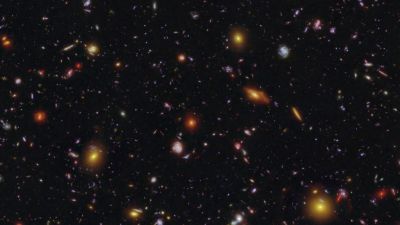
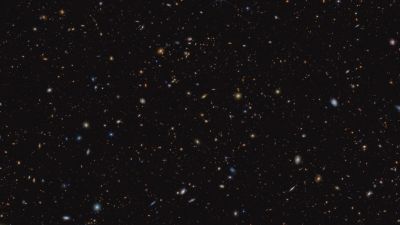
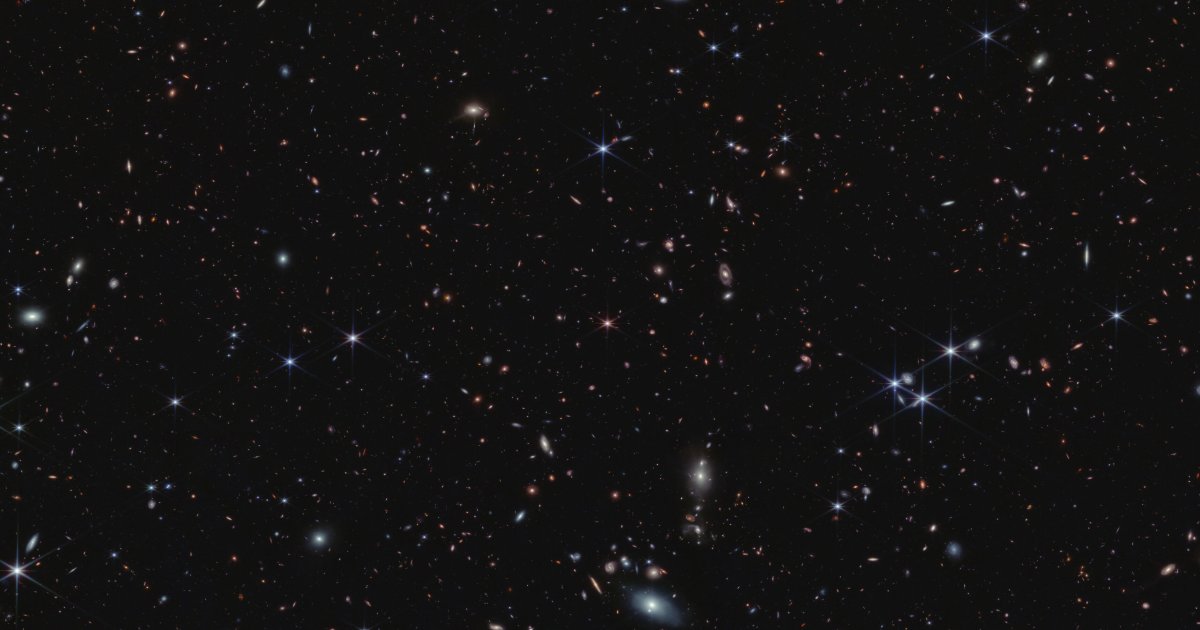
In a groundbreaking study led by Meyer et al. from the University of Geneva, the James Webb Space Telescope (JWST) has unveiled two ultra-luminous galaxies, COLA1 and NEPLA4, hosting black holes with masses between 170 and 190 million solar masses. These findings, published in May 2026 on arXiv, suggest that these black holes are 400 to 800 times more massive relative to their host galaxies than those observed in the present universe.
Understanding Overmassive Black Holes
The term 'overmassive' refers to black holes that are disproportionately large compared to the mass of their host galaxies. In the local universe, supermassive black holes typically account for about 0.1% of their host galaxy's mass. However, the black holes in COLA1 and NEPLA4 are significantly more massive, posing intriguing questions about their formation and growth in the early universe.
Black Hole-Galaxy Co-Evolution
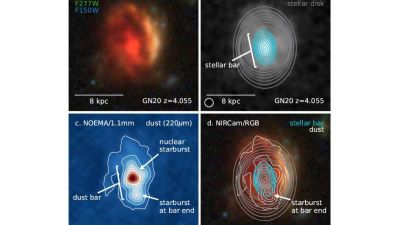
The discovery of these overmassive black holes challenges the current understanding of black hole-galaxy co-evolution. Traditionally, it is believed that black holes and their host galaxies grow together, maintaining a relatively stable mass ratio. The findings from JWST suggest that in the early universe, black holes may have grown more rapidly than their host galaxies, potentially due to different accretion processes or initial conditions.
Role of NIRSpec in the Discovery
The Near-Infrared Spectrograph (NIRSpec) aboard JWST played a crucial role in this discovery. By analyzing the broad H-alpha emission lines, NIRSpec was able to identify the active galactic nuclei (AGN) in these galaxies. The broadening of these lines is indicative of the high velocities of gas swirling around the black holes, allowing scientists to estimate their masses.
Implications for Black Hole Seeds
The presence of such massive black holes at a redshift of approximately 6.6 suggests that they formed from either very massive initial 'seeds' or experienced rapid growth. This has significant implications for our understanding of black hole formation. If these black holes grew from light seeds, it implies an extraordinarily efficient accretion process. Conversely, if they originated from heavy seeds, it may suggest that conditions in the early universe were conducive to the formation of massive black holes directly from the collapse of massive gas clouds.
Challenges and Future Research
This discovery opens up numerous avenues for future research. Understanding how these black holes became so massive so quickly is crucial for refining models of galaxy formation and evolution. Further observations and simulations will be necessary to determine whether these findings are unique to COLA1 and NEPLA4 or indicative of a broader trend in the early universe.
Conclusion
The JWST continues to revolutionize our understanding of the cosmos. By revealing the existence of overmassive black holes in early galaxies, it challenges existing paradigms and invites scientists to rethink the processes that governed the early universe. As we continue to explore the universe with JWST, we can expect more discoveries that will reshape our understanding of cosmic history.