Introduction to TOI-3884 and Its Unique Geometry
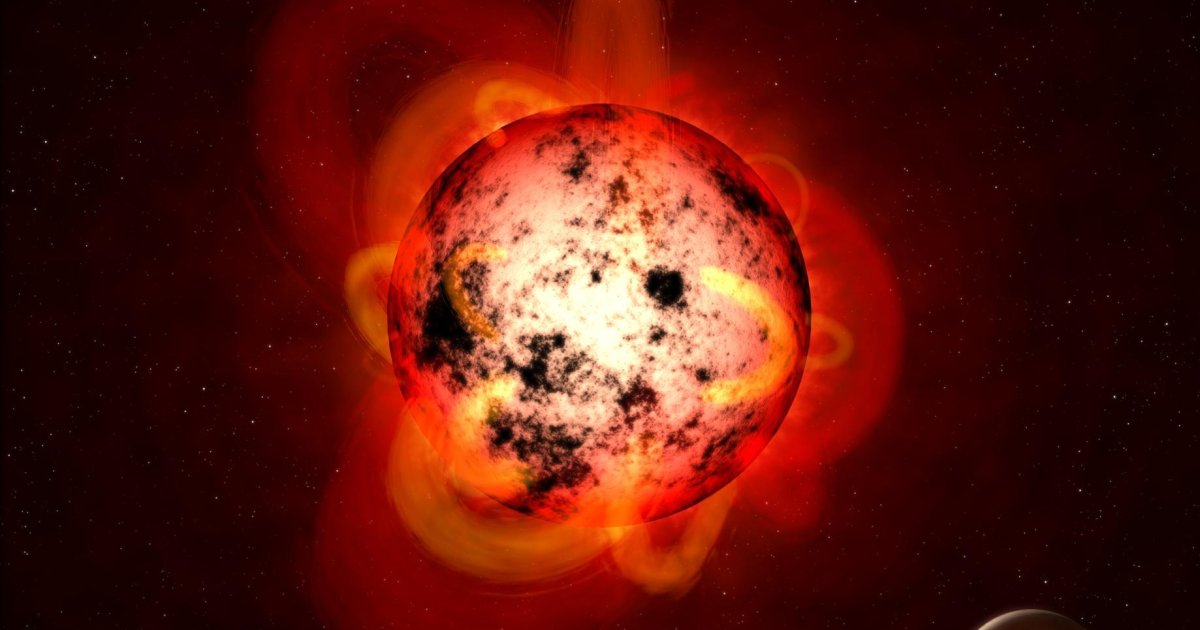
The James Webb Space Telescope (JWST) has achieved a groundbreaking milestone by capturing the first direct spectrum of a starspot on the M-dwarf star TOI-3884. This achievement was made possible due to the unique pole-on transit geometry of its orbiting planet, TOI-3884b. Such a configuration allowed JWST to observe the starspot directly as the planet transited across the star's pole, providing unprecedented insights into the characteristics of starspots on fully-convective M-dwarfs.
How TOI-3884b's Transit Geometry Enabled the Observation
TOI-3884b's transit across the polar region of its host star is a rare alignment that facilitated this observation. Unlike typical transits that occur along the equatorial plane, this pole-on transit allowed JWST to capture light that directly interacted with the starspot. As the planet moved across the star's pole, it temporarily obscured the starspot, enabling scientists to isolate and analyze the light spectrum from the spot itself. This unique vantage point provided a clear view of the spot's spectral characteristics, which are often muddled in more common equatorial transits.
Unexpected Starspot Contrast Observations
The spectrum obtained from the starspot on TOI-3884 revealed surprising contrasts when compared to existing starspot models, particularly at optical wavelengths. Current models predict certain temperature and color contrasts between starspots and the surrounding stellar surface. However, the data from JWST indicated that the contrast was significantly different, suggesting that the starspots on fully-convective M-dwarfs like TOI-3884 may have unique properties not accounted for in existing models.
These findings challenge the prevailing assumptions about starspot characteristics, which have been largely based on observations of more massive stars. The differences observed in TOI-3884's starspot spectrum could imply variations in magnetic field strength, temperature, or chemical composition that are not yet fully understood.
Implications for Exoplanet Atmosphere Studies
The ability to directly observe and characterize starspots on M-dwarfs like TOI-3884 has significant implications for the study of exoplanet atmospheres. Starspots can contaminate the transmission spectra of exoplanets, leading to inaccurate readings of atmospheric composition. By understanding the specific spectral characteristics of starspots, scientists can better correct for these contaminants, leading to cleaner and more accurate measurements of exoplanet atmospheres.
This is particularly important for M-dwarfs, which are common hosts of exoplanets. The improved accuracy in atmospheric data could enhance our understanding of exoplanetary climates and potential habitability.
Conclusion
The JWST's direct observation of a starspot on TOI-3884 marks a significant advancement in our understanding of stellar and planetary systems. The unique transit geometry of TOI-3884b provided a rare opportunity to study starspots in detail, revealing contrasts that challenge current models and offering new pathways for refining exoplanet atmospheric studies. As we continue to explore the universe with JWST, these findings underscore the importance of adapting our models to accommodate the diverse characteristics of stars and their planetary systems.
For more detailed information, you can explore the original study and the NASA Exoplanet Catalog.