Introduction to the Discovery
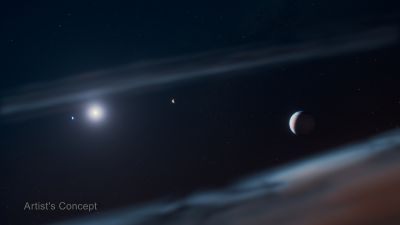
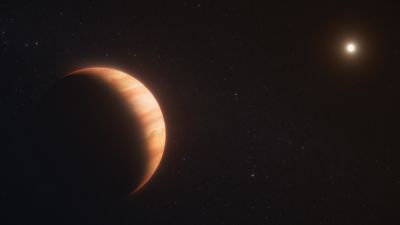
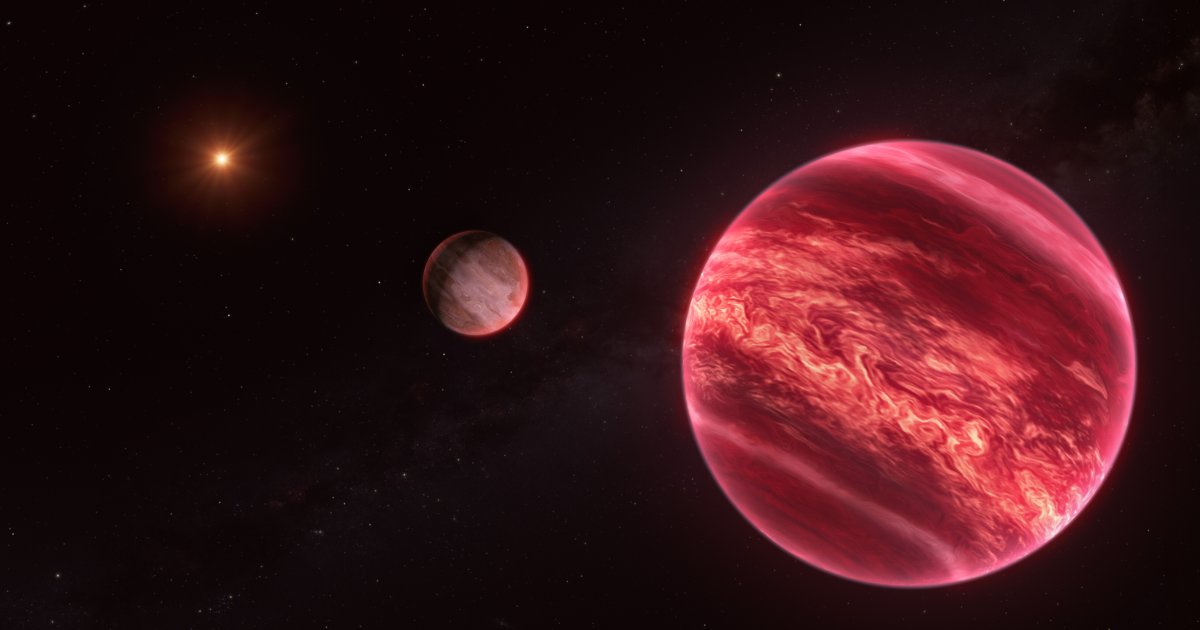
In a groundbreaking study published in Nature on July 22, 2026, astronomers have identified a promising exomoon candidate orbiting the brown dwarf CD-35 2722. This discovery was made possible by applying the radial velocity method using the European Southern Observatory's (ESO) Very Large Telescope (VLT) equipped with the CRIRES+ instrument. This marks the first time radial velocity has been applied to a directly imaged brown dwarf, revealing a gaseous satellite with a mass comparable to Jupiter.
The CRIRES+ Method
The CRIRES+ instrument, an upgrade to the original CRIRES (CRyogenic high-resolution InfraRed Echelle Spectrograph), allows for high-resolution spectroscopy in the infrared spectrum. This capability is crucial for studying objects like brown dwarfs, which emit most of their light in the infrared. By measuring the Doppler shifts in the light from CD-35 2722, astronomers were able to detect the gravitational influence of the exomoon candidate, providing evidence of its existence.
The radial velocity method works by detecting variations in the velocity of a star or brown dwarf as it moves towards or away from Earth. These variations are caused by the gravitational pull of an orbiting body, such as a planet or moon. The successful application of this method to a brown dwarf is a significant technological achievement, expanding the potential for discovering more such bodies in the future.
Why This is the Strongest Exomoon Candidate Yet
Previous searches for exomoons have largely relied on indirect methods, such as transit timing variations, which can be difficult to interpret. The direct detection of a radial velocity signal from CD-35 2722 offers a more robust confirmation of the exomoon's presence. The candidate, with a mass similar to Jupiter, orbits a brown dwarf that itself is about 30 times the mass of Jupiter and orbits a star approximately half the mass of our Sun. This unique configuration provides a rare opportunity to study the dynamics of such systems.
Blurring the Lines Between Planets, Moons, and Brown Dwarfs
The discovery of this exomoon candidate challenges traditional definitions within astronomy. Brown dwarfs are often considered "failed stars" because they are not massive enough to sustain hydrogen fusion in their cores. However, they share characteristics with both stars and planets. The identification of a Jupiter-mass exomoon around a brown dwarf further blurs the lines between planets, moons, and brown dwarfs, raising questions about how these objects are classified.
As scientists continue to explore these boundaries, discoveries like the one around CD-35 2722 will be crucial in refining our understanding of celestial bodies and their formation. The presence of a massive moon around a brown dwarf suggests that moon formation processes might be more complex and varied than previously thought.
Conclusion
The detection of a potential exomoon around CD-35 2722 is a milestone in the field of exoplanetary science. By successfully applying the radial velocity method to a brown dwarf, astronomers have opened new avenues for the discovery of moons beyond our solar system. As technology advances and our methods improve, the possibility of finding more such intriguing systems increases, offering deeper insights into the universe's diversity.
For further reading, visit the Phys.org article covering this discovery.