Introduction to TOI-791 b and c
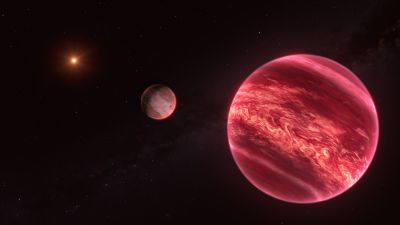
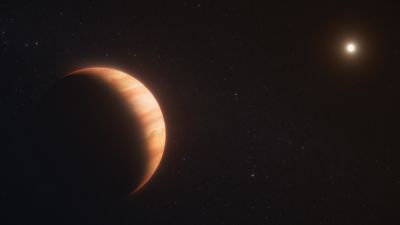
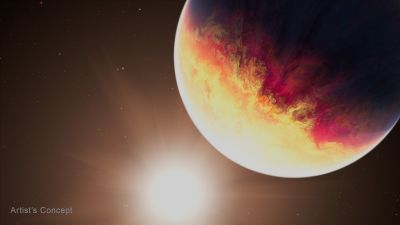
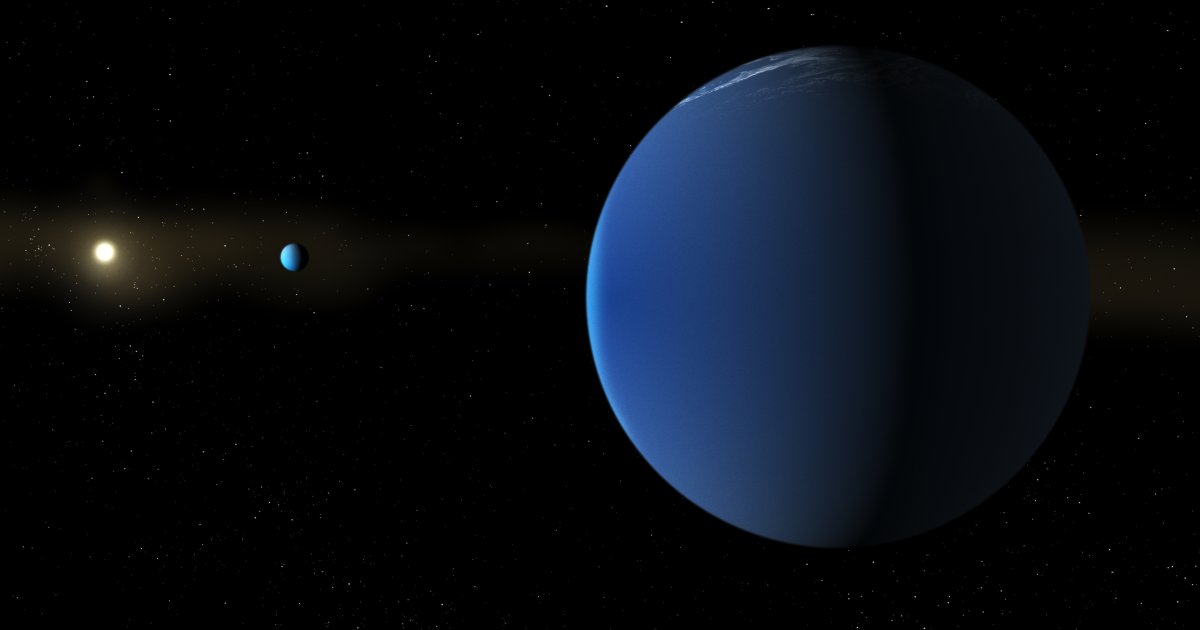
NASA's Transiting Exoplanet Survey Satellite (TESS) has made a groundbreaking discovery with the identification of two extraordinary exoplanets, TOI-791 b and c. These planets are categorized as 'super-puffs,' a term used to describe planets with an unusually low density. Orbiting a Sun-like star approximately 1,113 light-years away, these exoplanets have densities so low that they rival the fluffiness of cotton candy.
Characteristics of TOI-791 b and c
TOI-791 b and c are both Jupiter-sized, yet they possess only 3.0% and 5.9% of Jupiter's mass, respectively. This remarkable disparity between size and mass places them among the lowest-density exoplanets ever discovered. TOI-791 b completes its orbit in 139 days, while TOI-791 c takes 232 days to circle its host star.
Transit Timing Analysis
The masses of these exoplanets were determined using a technique known as transit timing variations (TTVs). This method involves observing the gravitational interactions between the planets, which cause slight variations in their transit times as they pass in front of their host star. By analyzing these variations, scientists can infer the masses of the planets. The TTV method is particularly useful for systems like TOI-791, where traditional methods of mass measurement may not be feasible.
The Cotton-Candy Density
The discovery of TOI-791 b and c adds to the intriguing category of 'super-puff' planets. These planets have densities so low that they challenge existing models of planetary formation and structure. Scientists estimate that the low density could be due to a variety of factors, including a high atmospheric content of hydrogen and helium, or perhaps an extended atmosphere that has not yet been stripped away by stellar radiation.
Implications for Giant-Planet Formation
The existence of such low-density planets raises significant questions about the formation and evolution of giant planets. Traditional theories suggest that giant planets form through the accretion of gas onto a solid core. However, the extreme low density of TOI-791 b and c may indicate a different formation pathway or an unusual evolutionary history.
One possibility is that these planets formed further out in their star system and migrated inward, retaining a thick, gaseous envelope. Alternatively, they might have formed in a region of the protoplanetary disk with an unusually high gas-to-dust ratio, allowing them to accumulate a large atmosphere relative to their core mass.
Understanding the nature of 'super-puff' planets like TOI-791 b and c could provide valuable insights into the diversity of planetary systems and the processes that govern their formation. As TESS continues to survey the sky, scientists anticipate discovering more such intriguing worlds, each offering a unique glimpse into the complexities of our universe.
Conclusion
The discovery of TOI-791 b and c by NASA's TESS mission represents a significant advancement in our understanding of exoplanets, particularly those with extreme characteristics. These 'super-puff' planets not only challenge existing models of planetary formation but also highlight the diversity and complexity of planetary systems beyond our own. As we continue to explore these distant worlds, each discovery brings us closer to unraveling the mysteries of planet formation and the potential for life elsewhere in the universe.
For further reading, you can explore the detailed study published in the Monthly Notices of the Royal Astronomical Society.