Webb's Historic Detection of Methane on 3I/ATLAS
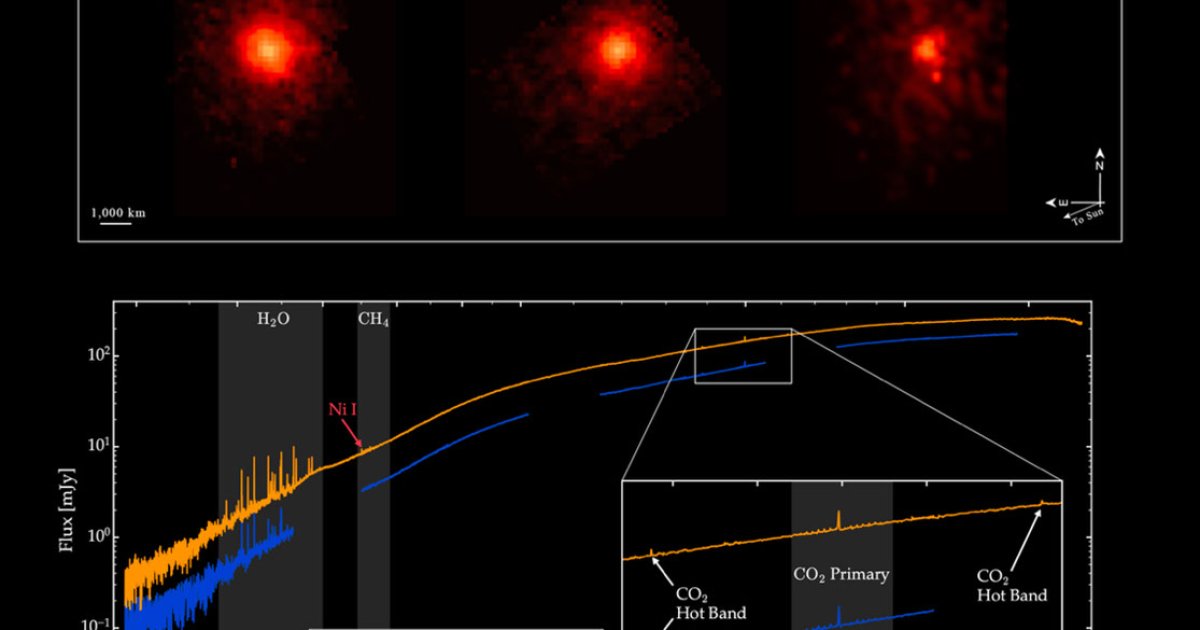
In June 2026, NASA's James Webb Space Telescope (JWST) made a groundbreaking discovery by detecting methane on interstellar comet 3I/ATLAS. This marks the first time a mid-infrared chemical fingerprint has been obtained from an interstellar visitor. Using the Mid-Infrared Instrument's (MIRI) Medium Resolution Spectrometer, scientists were able to analyze the comet's composition in unprecedented detail.
Surprisingly High Methane-to-Water Ratio
The data revealed a surprisingly high methane-to-water ratio, which has intrigued astronomers and chemists alike. Typically, comets in our solar system have a lower methane content relative to water. The elevated levels of methane on 3I/ATLAS suggest unique chemical processes in its home star system that differ from those in our own. This discovery provides a rare glimpse into the diversity of chemical compositions possible in other star systems.
Delayed Post-Perihelion Methane Signal
Interestingly, the methane signal was detected post-perihelion, meaning after the comet had passed its closest approach to the Sun. This delay could indicate that the methane was trapped beneath the surface and only released as the comet warmed during its solar flyby. Such a phenomenon could imply that 3I/ATLAS has a layered structure, with volatile compounds like methane buried under more stable materials.
Insights into 3I/ATLAS's Home Star System
The presence of methane in such high concentrations offers clues about the volatile chemistry of the comet's origin. Scientists estimate that the comet's home system might have a different balance of volatile compounds, possibly due to variations in temperature, pressure, or chemical makeup during its formation. This could mean that the star system where 3I/ATLAS originated has a richer or more diverse chemical environment, potentially affecting the types of planets and other celestial bodies that could form there.
First Mid-Infrared Chemical Fingerprint
This detection is significant as it represents the first mid-infrared chemical fingerprint of an interstellar object. Previous observations of interstellar visitors, such as 1I/'Oumuamua, did not yield such detailed compositional data. The ability to analyze these chemical fingerprints allows scientists to make more informed hypotheses about the conditions in distant star systems and the potential for life-supporting environments.
For more information, you can visit the European Space Agency's report on this discovery.