Introduction
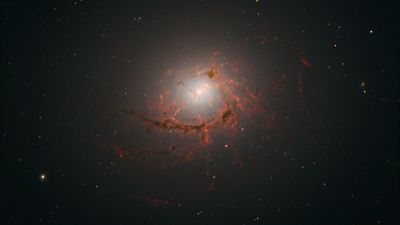
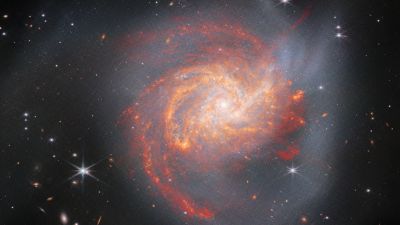
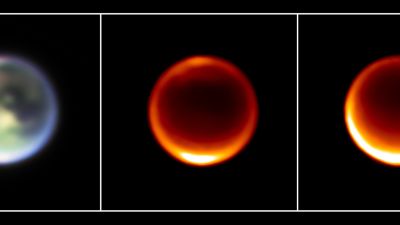
The James Webb Space Telescope (JWST) and the Hubble Space Telescope are two of the most powerful observatories ever built. While some might view JWST as a replacement for Hubble, they are, in fact, complementary tools that work together to enhance our understanding of the universe. Their differences in wavelength coverage and capabilities make them uniquely suited to observe different aspects of cosmic phenomena.
Wavelength Coverage: NIRCam vs. WFC3
One of the key differences between JWST and Hubble lies in their wavelength coverage. JWST's Near Infrared Camera (NIRCam) is designed to observe in the infrared spectrum, particularly from 0.6 to 5 microns. This allows it to peer through cosmic dust and capture light from the earliest galaxies, stars, and planetary systems. On the other hand, Hubble's Wide Field Camera 3 (WFC3) covers a broad range of wavelengths from the ultraviolet (UV) through visible light to near-infrared (0.2 to 1.7 microns). This range allows Hubble to capture detailed images of galaxies, nebulae, and other celestial objects in visible and ultraviolet light.
Why Infrared Sees Through Dust
Infrared light has longer wavelengths than visible light, allowing it to penetrate dust clouds that obscure many regions of space. This capability is crucial for studying star-forming regions, which are often shrouded in dust. JWST's infrared instruments can reveal stars and planetary systems in these regions that would otherwise remain hidden in visible light. For instance, the Pillars of Creation in the Eagle Nebula are a prime example. JWST's infrared images penetrate the dense columns of gas and dust, revealing newly forming stars within.
Ultraviolet Observations: Hubble's Domain
Unlike JWST, Hubble is equipped to observe ultraviolet light, which is crucial for studying the hottest and most energetic processes in the universe, such as star formation and the behavior of active galactic nuclei. Ultraviolet observations can reveal the presence of young, massive stars and provide insights into the chemical composition of interstellar gas. As a result, Hubble remains indispensable for UV astronomy, a domain where JWST cannot operate.
Iconic Paired Observations: Pillars of Creation, Carina Nebula, and Stephan's Quintet
Several iconic astronomical objects have been observed by both Hubble and JWST, showcasing their complementary capabilities.
Pillars of Creation
The Pillars of Creation, located in the Eagle Nebula, were first captured by Hubble in 1995. Hubble's visible light images highlight the intricate structures of the dust and gas columns. In contrast, JWST's infrared images reveal the young stars forming within these pillars, offering a deeper understanding of star formation processes.
Carina Nebula
In the Carina Nebula, Hubble's images capture the vibrant colors and intricate details of the nebula's visible light. JWST's infrared observations, however, provide a view through the dust, uncovering previously hidden stars and structures. This combination of data from both telescopes allows scientists to study the nebula's composition and dynamics in unprecedented detail.
Stephan's Quintet
Stephan's Quintet, a group of interacting galaxies, has been another target for both telescopes. Hubble's observations in visible and ultraviolet light reveal the interactions between the galaxies, while JWST's infrared capabilities highlight the dust and gas dynamics, providing a more comprehensive picture of these cosmic collisions.
Conclusion
While JWST and Hubble have different strengths, their combined observations provide a more complete understanding of the universe. By covering different parts of the electromagnetic spectrum, they enable astronomers to study celestial objects and phenomena from multiple perspectives. This synergy enhances our ability to explore the cosmos and uncover its many mysteries.
For more information on the capabilities of JWST and Hubble, visit the NASA JWST page and the NASA Hubble page.