Introduction to Euclid's Galactic Bulge Survey
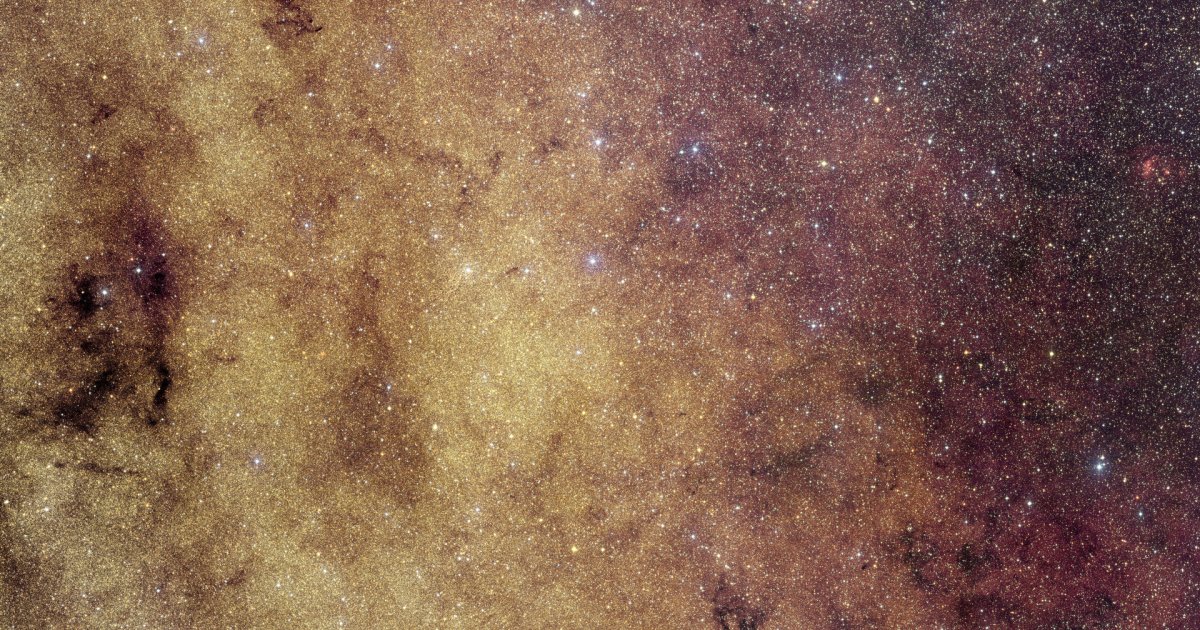
On June 24, 2026, the European Space Agency's (ESA) Euclid mission unveiled a groundbreaking data release: a 26-hour, 9-pointing visible-light mosaic capturing over 60 million stars and 51 known planetary systems within the Milky Way's galactic bulge. This survey is not just a marvel of modern astrophotography but a critical foundation for future astronomical endeavors, particularly in the realm of exoplanet discovery.
The Role of Euclid as a Time Baseline for Roman
NASA's Nancy Grace Roman Space Telescope, set to launch in the coming years, will focus on microlensing to discover new exoplanets. Euclid's detailed survey of the galactic bulge provides an essential time baseline for Roman's mission. By capturing the current state of this densely packed region, Euclid offers a reference point against which the Roman Telescope will measure changes over time, crucial for detecting microlensing events that indicate the presence of exoplanets.
Understanding Microlensing
Microlensing occurs when a massive object, like a star or planet, passes between an observer and a more distant star, bending the light and causing a temporary increase in brightness. This technique is particularly effective in the crowded stellar environments of the galactic bulge, where traditional methods like transit photometry face challenges due to stellar crowding. Scientists estimate that Roman's survey could discover thousands of new exoplanets, thanks to the groundwork laid by Euclid.
Crowding-Limited Bulge Photometry and Stellar Populations
Euclid's survey of the galactic bulge is a feat of crowding-limited photometry, a method that deals with the challenges of observing individual stars in densely populated regions. This approach is crucial for understanding the stellar populations within the bulge, offering insights into the formation and evolution of the inner Milky Way.
Revealing the Secrets of the Inner Milky Way
The galactic bulge is a complex region, rich with old stars and the remnants of past galactic mergers. By analyzing the data from Euclid's survey, astronomers can study the distribution and characteristics of these stars, shedding light on the history of our galaxy. This includes understanding the age, metallicity, and motion of stars within the bulge, which are key to piecing together the Milky Way's formation history.
Conclusion
Euclid's Galactic Bulge Survey marks a significant milestone in our quest to understand the universe. By providing a detailed snapshot of the Milky Way's heart, it not only enhances our knowledge of stellar populations but also sets the stage for the Roman Telescope's ambitious exoplanetary survey. As these missions continue to unfold, they promise to deepen our understanding of both the cosmos and our place within it. For more details, visit NASA's official page on the Euclid mission.