Launch Preparations for the Nancy Grace Roman Space Telescope
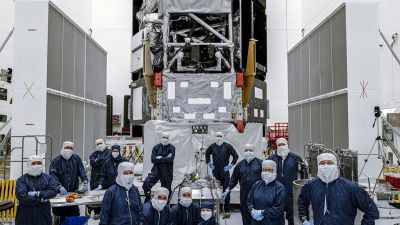
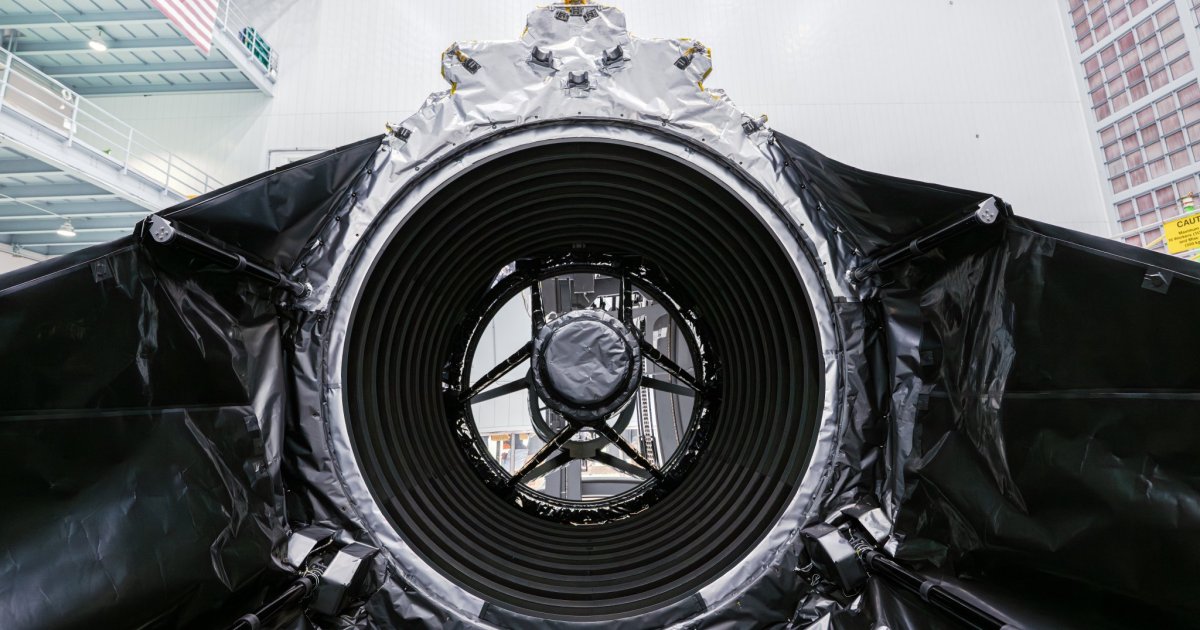
As NASA's Nancy Grace Roman Space Telescope gears up for its scheduled launch on August 30, 2026, significant strides are being made at the Goddard Space Flight Center. According to a recent NASA blog post dated June 3, 2026, the observatory is currently being packed for transport to the Kennedy Space Center. This marks a crucial phase in the telescope's journey, as it undergoes final preparations for its mission to explore the universe's most enigmatic phenomena.
Final Preparations at Goddard Space Flight Center
The Roman Space Telescope, named after the pioneering NASA executive Nancy Grace Roman, is in its final stages of preparation at Goddard. The observatory is set to be transported to Kennedy Space Center this month, where it will undergo powered testing and hydrazine fueling. The fueling process involves loading approximately 290 gallons of hydrazine, a critical step to ensure the spacecraft's maneuverability in space.
Integration with Falcon Heavy
Once at Kennedy, the telescope will be integrated with a SpaceX Falcon Heavy rocket. This powerful launch vehicle is chosen for its ability to deliver heavy payloads into space, making it ideal for the Roman Telescope's journey. The integration is a meticulous process, ensuring that the telescope is securely attached and ready for its voyage.
Scientific Goals: Dark Energy and Exoplanet Microlensing
The Roman Space Telescope's mission is centered around two primary scientific goals: the study of dark energy and the search for exoplanets through microlensing.
Understanding Dark Energy
One of the most intriguing aspects of the Roman Telescope's mission is its focus on dark energy, a mysterious force that scientists estimate makes up about 68% of the universe. The telescope will conduct wide-field infrared surveys to map the distribution of galaxies and measure the expansion of the universe. By doing so, it aims to shed light on the nature of dark energy and its role in cosmic acceleration.
Exoplanet Microlensing
In addition to exploring dark energy, the Roman Telescope will employ a technique known as gravitational microlensing to discover new exoplanets. This method involves observing the bending of light from distant stars as planets pass in front of them, acting as lenses. This approach is particularly effective in detecting planets that are otherwise difficult to observe with traditional methods, potentially revealing thousands of new worlds.
Looking Ahead
The upcoming launch of the Nancy Grace Roman Space Telescope represents a significant milestone in our quest to understand the universe. As it prepares for its journey aboard the Falcon Heavy, the scientific community eagerly anticipates the groundbreaking discoveries that await. For more details on the Roman Telescope's mission and launch preparations, visit the NASA website.