The Bullet Cluster and Dark Matter Evidence
The Bullet Cluster, a pair of colliding galaxy clusters, has provided some of the most compelling evidence for the existence of dark matter. Observations by the Chandra X-ray Observatory revealed a separation between the cluster's baryonic matter, visible in X-rays, and its gravitational mass, inferred from gravitational lensing studies. This separation suggests that dark matter does not interact with normal matter except through gravity, supporting its existence as a distinct component of the universe. According to NASA, this discovery has been pivotal in understanding the composition of the universe and is often cited as a 'smoking gun' for dark matter.
Supermassive Black Hole Feedback
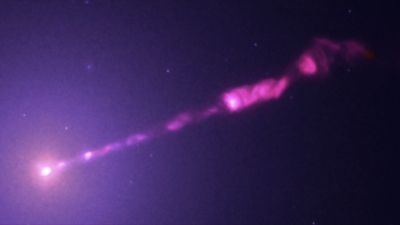
Chandra has also been instrumental in studying the feedback mechanisms of supermassive black holes. These colossal entities reside at the centers of most galaxies, including our own Milky Way. Chandra's X-ray observations have shown how energy emitted by supermassive black holes can influence their host galaxies. For instance, jets and winds from these black holes can heat surrounding gas, preventing it from cooling and forming new stars. This feedback process is crucial in regulating galaxy growth and evolution. The European Space Agency (ESA) highlights Chandra's role in unveiling these complex interactions.
Neutron Star Mergers and Gravitational Wave Follow-up
In recent years, Chandra has played a key role in the follow-up observations of gravitational wave events, particularly those involving neutron star mergers. When two neutron stars collide, they produce gravitational waves detectable by observatories like LIGO and Virgo. Chandra's X-ray capabilities allow scientists to study the aftermath of these cataclysmic events, providing insights into the formation of heavy elements and the behavior of matter under extreme conditions. As scientists estimate, these observations are crucial for understanding the universe's most energetic phenomena.
Imaging the Hot Intracluster Medium
Galaxy clusters contain vast amounts of hot gas, known as the intracluster medium, which emits X-rays detectable by Chandra. By imaging this hot gas, Chandra helps astronomers measure the mass and dynamics of galaxy clusters. This information is vital for studying the large-scale structure of the universe and the role of dark matter in cluster formation. The Space Telescope Science Institute (STScI) notes that these observations provide a window into the universe's most massive structures.
What Makes X-ray Astronomy Distinct?
X-ray astronomy, as conducted by Chandra, offers unique insights that are not possible with optical or infrared telescopes. X-rays are produced by extremely hot and energetic processes, such as those found in supernova remnants, black holes, and neutron stars. Unlike optical light, X-rays can penetrate dense regions of space, revealing hidden phenomena. This ability allows astronomers to explore the universe's most extreme environments, from the hearts of galaxies to the remnants of massive stars. NASA emphasizes that X-ray observations complement other wavelengths, providing a more comprehensive picture of cosmic events.
Conclusion
Over the past 25 years, the Chandra X-ray Observatory has fundamentally reshaped our understanding of the universe. From providing evidence for dark matter to unraveling the mysteries of supermassive black holes and neutron star mergers, Chandra's contributions are invaluable. As we continue to explore the cosmos, the insights gained from X-ray astronomy will remain crucial in advancing our knowledge of the universe.