Introduction to NGC 3256 and Its Significance
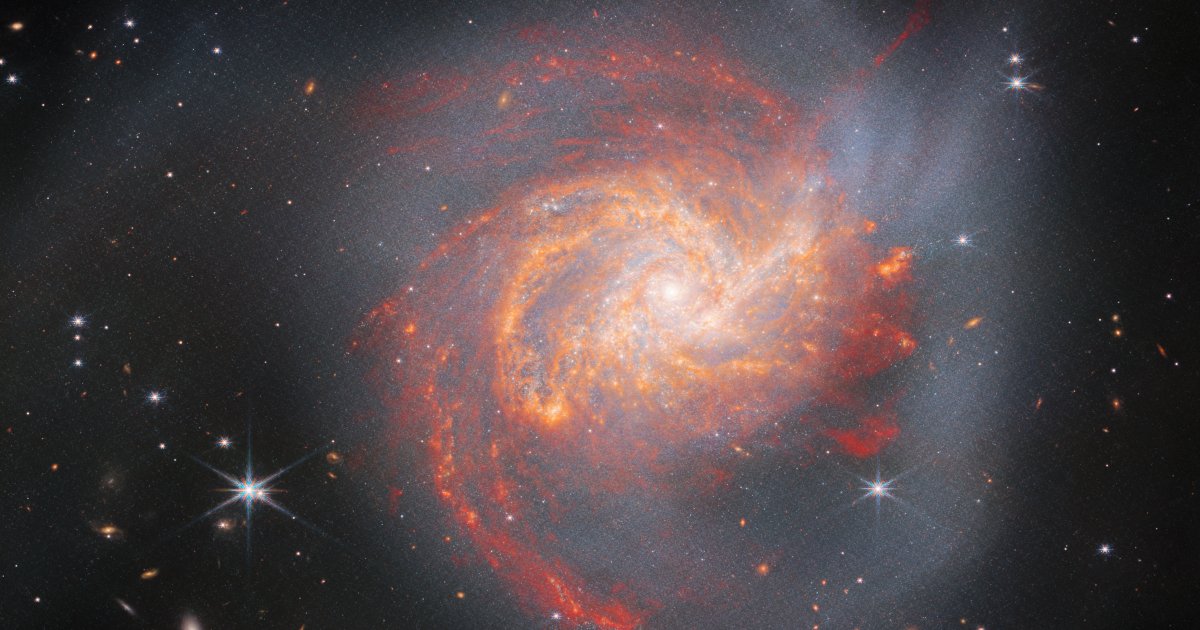
NGC 3256, located approximately 122 million light-years away, is the nearest luminous infrared starburst merger, making it a prime target for studying galactic evolution and star formation processes. This galaxy is characterized by intense starburst activity, where young star clusters are forming at a rapid pace. At the 248th meeting of the American Astronomical Society (AAS), Dr. Pathak from Ohio State University presented groundbreaking findings on the pre-supernova feedback pressures across roughly 1,600 young clusters in NGC 3256, utilizing data from the James Webb Space Telescope (JWST), Atacama Large Millimeter/submillimeter Array (ALMA), Hubble Space Telescope (HST), and the Multi Unit Spectroscopic Explorer (MUSE).
Measuring Feedback Pressures
The study revealed that the feedback pressures in these clusters are approximately 100 times greater than typical values found in other galaxies. This intense pressure is primarily driven by ultraviolet and infrared radiation impacting dust, rather than the warm ionized gas that often dominates in less active regions. Such high pressures are crucial for understanding how energy and momentum are transferred from young stars to their surrounding environments, influencing future star formation and the evolution of the galaxy.
The Role of JWST in Observing Dust-Buried Clusters
One of the key breakthroughs in this research was the ability of JWST's Near Infrared Camera (NIRCam) and Mid-Infrared Instrument (MIRI) to detect star clusters that are deeply embedded in dust, which optical surveys typically miss. These instruments have allowed astronomers to peer through the dense dust clouds that obscure many of the young clusters in NGC 3256, providing a more complete census of the star-forming regions within the galaxy.
Combining Data from Multiple Observatories
By integrating observations from JWST, ALMA, HST, and MUSE, researchers were able to construct a detailed picture of the feedback mechanisms at play in NGC 3256. ALMA's sensitivity to millimeter and submillimeter wavelengths provided critical insights into the cold molecular gas content, while HST's optical and ultraviolet capabilities offered complementary data on the ionized gas and young stellar populations. MUSE, with its integral field spectroscopy, contributed to understanding the kinematics and physical conditions of the ionized gas.
Implications for Galactic Evolution
The findings from this study have significant implications for our understanding of galactic evolution, particularly in starburst galaxies. The intense feedback pressures observed suggest that young star clusters in NGC 3256 are capable of driving powerful winds and outflows, which can regulate star formation by dispersing gas and dust. This feedback mechanism is a critical component in shaping the future evolution of the galaxy, influencing both its star formation rate and its morphological development.
Conclusion
The cluster-by-cluster feedback census conducted by Dr. Pathak and colleagues provides a new window into the complex interplay between young stars and their environments in starburst galaxies. By leveraging the capabilities of multiple state-of-the-art observatories, this study enhances our understanding of the processes that govern star formation and galactic evolution. As scientists continue to analyze the wealth of data from these observations, we can expect further insights into the dynamic processes shaping galaxies like NGC 3256.
For more detailed information, you can read the full report on Phys.org.