Introduction to the Hubble Tension
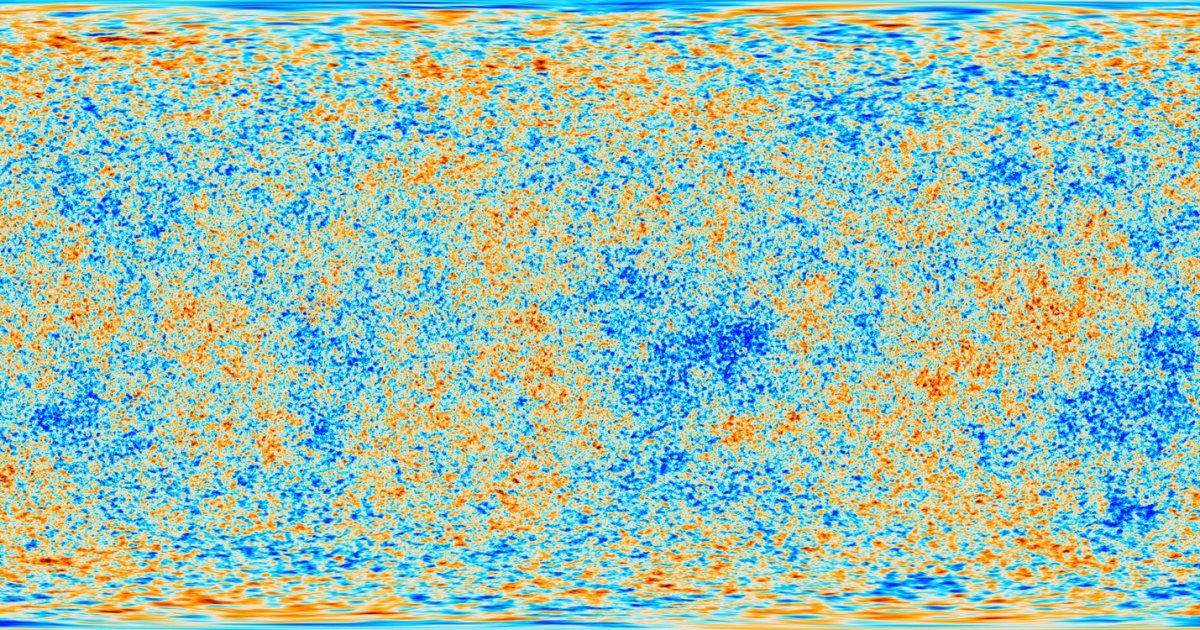
The Hubble tension refers to the discrepancy between the Hubble constant (H0) values derived from early and late universe observations. Measurements of the cosmic microwave background (CMB) by the Planck satellite suggest a lower H0 value of about 67.4 km/s/Mpc, while local observations, such as those from the SH0ES collaboration, indicate a higher value around 73 km/s/Mpc. This inconsistency has become a significant issue in cosmology, often referred to as a 'crisis' because it challenges our understanding of the universe's expansion.
Sign-Switching Dark Energy: A New Approach
The recent paper, available on arXiv, explores a novel approach to this problem by considering a model where dark energy transitions from negative to positive values over time. This model, known as smooth sign-switching dark energy (ECDM/LsCDM), hypothesizes that the vacuum energy of the universe undergoes a sign flip, which could potentially reconcile the differing H0 measurements.
Theoretical Background
Dark energy is a mysterious force driving the accelerated expansion of the universe. In standard cosmological models, it is represented by a constant vacuum energy with a positive value. However, the smooth sign-switching model proposes that this energy can change signs, influencing the rate of cosmic expansion differently over time. Scientists estimate that such a dynamic behavior could align early and late universe observations more closely.
Confronting the Model with Observational Data
The study rigorously tests the sign-switching dark energy model against a comprehensive set of observational data, including:
- Planck, ACT, and SPT CMB data: These datasets provide precise measurements of the early universe's conditions, crucial for understanding initial expansion rates.
- DESI DR2 BAO data: The Dark Energy Spectroscopic Instrument's baryon acoustic oscillations (BAO) data help trace the universe's expansion history.
- Pantheon+ Supernovae: Observations of distant supernovae offer insights into the universe's expansion over time.
- SH0ES H0 measurements: Local measurements of the Hubble constant are critical for assessing the current expansion rate.
The joint analysis of these datasets aims to determine whether the sign-switching model can provide a consistent explanation for the observed H0 values.
Findings and Implications
The study's findings suggest that the smooth sign-switching dark energy model offers a promising avenue for resolving the Hubble tension. By allowing dark energy to transition from negative to positive, the model can potentially bridge the gap between early and late universe observations. However, the authors note that while the model shows potential, further investigation and more precise data are needed to confirm its viability.
This research is significant as it opens new pathways for understanding dark energy's role in cosmic expansion. If validated, it could lead to a paradigm shift in cosmology, altering our comprehension of the universe's fundamental forces.
Conclusion
As cosmologists continue to grapple with the Hubble tension, innovative models like smooth sign-switching dark energy offer hope for resolution. By integrating diverse data sources, this study provides a comprehensive test of the model's potential, marking a critical step in addressing one of modern cosmology's most pressing challenges.