Chandra X-ray Observatory Tracker
The flagship X-ray telescope of NASA's Great Observatories - operating since July 1999, peering into black holes, supernova remnants, and the hottest, most violent regions of our universe.
OPERATIONAL — Operating Time Since Launch
Welcome to the Chandra X-ray Observatory tracker - your dashboard for NASA's flagship X-ray space telescope. This Chandra tracker features a live operational counter, science instrument profiles, mission timeline, and the latest discovery imagery. Whether you call it the Chandra Observatory or simply the Chandra telescope, you'll find everything you need to follow more than two decades of black hole, supernova, and dark matter science.
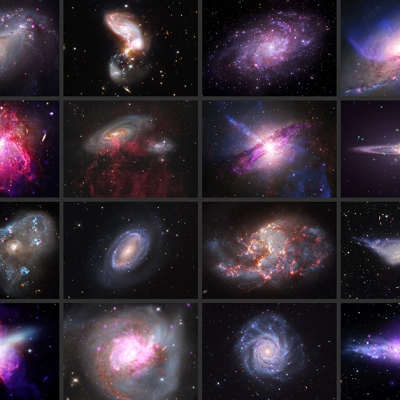
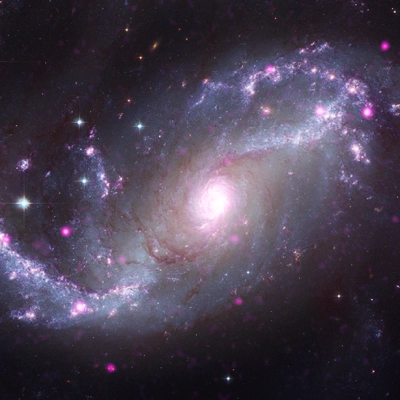
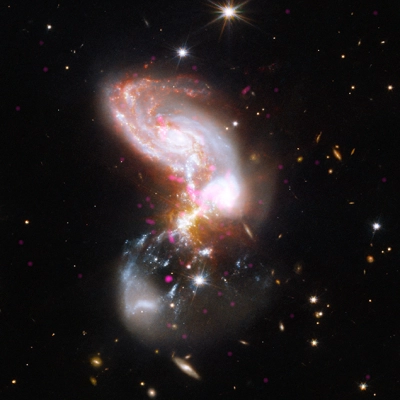
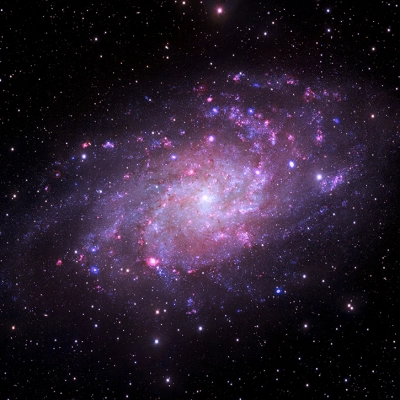
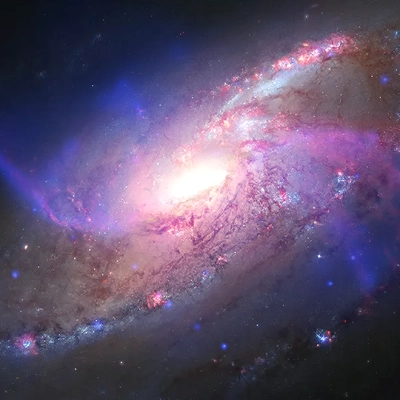
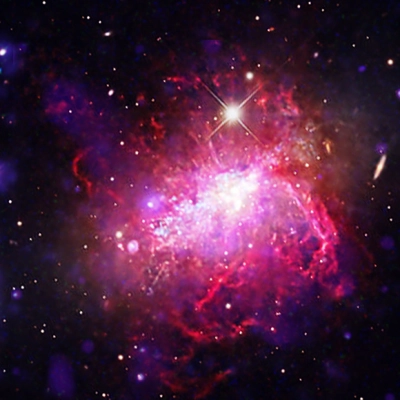
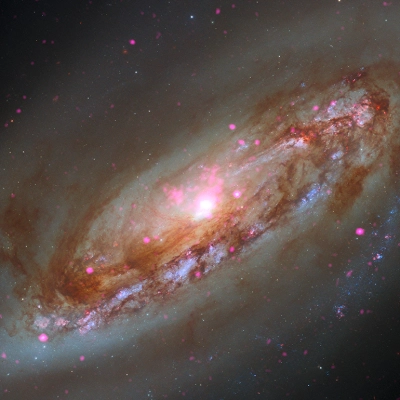
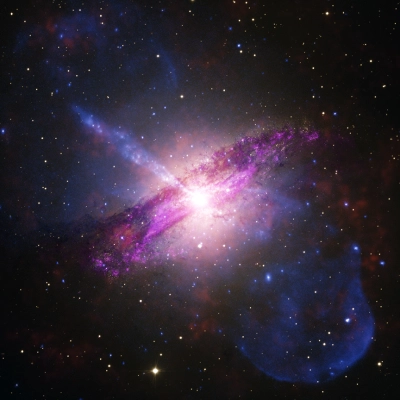
Chandra X-ray Gallery
Latest images from the Chandra X-ray Observatory mission
Mission at a Glance
Science Instruments
Chandra carries four primary science instruments that work together to capture X-rays from the most extreme objects in the universe.

HRMA
🇺🇸 NASA / SAO
Four pairs of nested grazing-incidence mirrors with 0.5-arcsecond resolution - the smoothest large mirrors ever fabricated, polished to within a few atoms of perfection.

ACIS
🇺🇸 Penn State / MIT
A ten-CCD camera that simultaneously images and measures the energy of incoming X-rays, enabling Chandra's spectroscopy across a 0.2-10 keV energy range.

HRC
🇺🇸 SAO
Microchannel plate detector pair providing the sharpest images Chandra produces - matching the optics' 0.5-arcsecond resolution with sub-microsecond timing precision.

HETG / LETG
🇪🇺 MIT / SRON
High and Low Energy Transmission Gratings that disperse incoming X-rays into spectra, allowing detailed chemical and velocity analysis of distant cosmic plasmas.
Mission Timeline
Key milestones across more than two decades of Chandra X-ray Observatory science.
Launch on STS-93
Space Shuttle Columbia launches Chandra from Kennedy Space Center under the command of Eileen Collins, the first woman to command a Shuttle mission.
First Light
Chandra captures its first X-ray images of supernova remnant Cassiopeia A, immediately revealing a previously unseen central neutron star.
Sgr A* Confirmed
Chandra detects X-ray flares from Sagittarius A*, providing strong evidence for the supermassive black hole at the center of our Milky Way.
Bullet Cluster Discovery
Combining Chandra X-ray imaging with optical lensing data delivers the most direct empirical evidence for the existence of dark matter.
20-Year Anniversary
Chandra celebrates two decades of operations, having far exceeded its planned 5-year mission with no signs of slowing down.
Ongoing Operations
Chandra continues to deliver groundbreaking observations, contributing to discoveries about black holes, dark matter, exoplanet atmospheres, and cosmic evolution.
Historic Firsts
Chandra has reshaped X-ray astronomy and delivered observations no telescope had achieved before.
First Sub-Arcsecond X-ray Imaging
Chandra was the first telescope to deliver X-ray images sharper than 0.5 arcseconds - a 100x improvement over its predecessors.
Direct Evidence of Dark Matter
The Bullet Cluster observations combined Chandra X-ray data with gravitational lensing to provide the most compelling proof that dark matter exists.
Black Hole Census
Chandra catalogued tens of thousands of supermassive black holes across cosmic time, revealing how they grew and shaped their host galaxies.
First X-ray Detection of Sgr A* Flares
Chandra detected the first X-ray flares from the supermassive black hole at the heart of the Milky Way, opening a new window on its activity.
Longest-Running Great Observatory
Chandra has been operating for more than 26 years - far beyond its 5-year design life - alongside Hubble as one of NASA's longest-lived flagship missions.
About X-ray Astronomy
Why we need a telescope above Earth's atmosphere to see the high-energy universe.
X-rays Are Blocked by Air
Earth's atmosphere absorbs nearly all incoming X-rays - making space-based telescopes the only way to study X-ray sources in the cosmos.
Grazing Incidence Optics
X-rays would pass through normal mirrors, so Chandra uses nested cylindrical mirrors that reflect X-rays at extremely shallow angles - like skipping stones.
Highly Elliptical Orbit
Chandra's 64-hour orbit takes it from 16,000 km to 139,000 km from Earth - well beyond the radiation belts that would disrupt observations.
Hot Universe Revealed
Chandra observes objects at millions of degrees: neutron stars, accreting black holes, exploded stars, and the gas between galaxies in clusters.
Probing Black Holes & Dark Matter
Chandra's primary science legacy
Chandra's razor-sharp X-ray vision has been pivotal in mapping supermassive black holes across cosmic history, characterizing the energetic feedback they push into their host galaxies, and providing some of the strongest empirical evidence for dark matter through observations of merging galaxy clusters like the Bullet Cluster. Today, Chandra continues to partner with JWST, Hubble, and ground-based observatories on multi-wavelength campaigns that connect the violent X-ray sky to the broader story of cosmic evolution.
Frequently Asked Questions
Everything you need to know about NASA's Chandra X-ray Observatory.
results found
Chandra is NASA's flagship X-ray telescope and one of the four "Great Observatories" alongside Hubble, Spitzer, and Compton. Launched in July 1999, it observes the universe in X-rays - revealing black holes, neutron stars, supernova remnants, and the hot intergalactic gas in galaxy clusters. With sub-arcsecond imaging, Chandra produces the sharpest X-ray pictures ever taken.
Chandra launched on July 23, 1999 at 12:31 AM EDT aboard Space Shuttle Columbia on mission STS-93. The mission was commanded by Eileen Collins, who became the first woman to command a Space Shuttle mission. After deployment from the Shuttle, Chandra used its Inertial Upper Stage booster to climb to its high elliptical operational orbit.
Chandra has been operating for more than 26 years as of 2026, dramatically exceeding its planned 5-year mission. It is one of the longest-running space telescopes in NASA's history. While some onboard systems show signs of age, Chandra continues to deliver world-class science and remains scientifically irreplaceable for high-resolution X-ray astronomy.
Chandra was built primarily by TRW (now Northrop Grumman) for NASA, with the science instruments contributed by Penn State University, MIT, the Smithsonian Astrophysical Observatory (SAO), and the Netherlands Institute for Space Research (SRON). Day-to-day science operations are managed by the Chandra X-ray Center at the Smithsonian Astrophysical Observatory in Cambridge, Massachusetts.
The observatory is named after Indian-American astrophysicist Subrahmanyan Chandrasekhar (1910-1995), who won the Nobel Prize in 1983 for his theoretical work on the structure and evolution of stars - including the Chandrasekhar limit, which describes the maximum mass of a stable white dwarf. "Chandra" is also the Sanskrit word for "Moon" or "luminous."
Each Great Observatory observes a different part of the electromagnetic spectrum. Hubble primarily sees visible and ultraviolet light. JWST observes infrared light, capturing cool dust and the most distant galaxies. Chandra detects X-rays - radiation produced by the hottest, most energetic processes in the universe like accreting black holes and exploding stars. Together they give astronomers a complete multi-wavelength view of the cosmos.
Chandra carries four science instruments behind its X-ray optics: ACIS (Advanced CCD Imaging Spectrometer) for imaging and spectroscopy, HRC (High Resolution Camera) for the sharpest imaging and timing, and the HETG and LETG transmission gratings that produce detailed X-ray spectra. The High Resolution Mirror Assembly (HRMA) at the front of the telescope focuses the X-rays onto whichever instrument is in use.
The High Resolution Mirror Assembly is Chandra's X-ray optic - four pairs of nested cylindrical mirrors that reflect incoming X-rays at extremely shallow grazing angles. The mirrors are coated with iridium and polished to within a few atoms of a perfect surface, making them the smoothest large mirrors ever produced. They deliver Chandra's signature 0.5-arcsecond imaging resolution.
The Advanced CCD Imaging Spectrometer is a ten-CCD camera built by Penn State and MIT. It records both the position and the energy of every X-ray photon it detects, giving Chandra simultaneous imaging and low-resolution spectroscopy across the 0.2-10 keV X-ray energy range. ACIS is used for most of Chandra's deep-field surveys and supernova remnant observations.
The High Resolution Camera is a microchannel plate detector pair built by the Smithsonian Astrophysical Observatory. It provides Chandra's sharpest images - matching the optics' 0.5-arcsecond resolution - and offers sub-microsecond timing precision, ideal for studying rapidly varying objects like pulsars and binary X-ray sources.
The High Energy Transmission Grating (HETG, MIT) and Low Energy Transmission Grating (LETG, SRON) can be inserted behind the mirrors to disperse incoming X-rays into high-resolution spectra. These spectra reveal the chemical composition, temperatures, and bulk velocities of cosmic plasmas - critical for studying stellar winds, accretion flows, and the intergalactic medium.
Chandra travels in a highly elliptical 64-hour orbit that takes it from about 16,000 km to 139,000 km from Earth - more than a third of the way to the Moon at its farthest. This unusual orbit was chosen so that Chandra spends most of its time above the Van Allen radiation belts, where its sensitive detectors can operate cleanly for long, uninterrupted exposures.
Chandra's sensitive CCDs would degrade quickly inside Earth's radiation belts, so the spacecraft automatically retracts its instruments behind shielding when passing through them on each orbit. Operations resume once Chandra reaches the cleaner environment near apogee. Despite these precautions, ACIS suffered some early radiation damage, which is now compensated for in software.
Day-to-day science operations are run by the Chandra X-ray Center (CXC) at the Smithsonian Astrophysical Observatory in Cambridge, Massachusetts. Spacecraft engineering operations are conducted by Northrop Grumman in Burlington, Massachusetts. The mission is managed by NASA's Marshall Space Flight Center in Huntsville, Alabama, on behalf of the agency's Astrophysics Division.
Astronomers from around the world submit competitive proposals each year. A peer-review panel selects the most compelling observations, and the Chandra X-ray Center plans the spacecraft's viewing schedule months in advance. Targets of opportunity - sudden events like supernovae or gamma-ray bursts - can interrupt the schedule for time-critical observations.
Chandra communicates through NASA's Deep Space Network (DSN). Each science observation is stored on solid-state recorders aboard the spacecraft and downlinked roughly every eight hours when Chandra is in view of a DSN antenna. The Chandra X-ray Center then processes the raw data into calibrated science products and delivers them to the principal investigator and, eventually, the public archive.
Chandra's discovery list spans the cosmos - it confirmed the supermassive black hole at the heart of the Milky Way through the first X-ray flares from Sagittarius A*, found tens of thousands of black holes in deep-field surveys, captured the first detailed X-ray view of supernova remnants like Cassiopeia A and the Crab Nebula, and provided the cleanest empirical proof of dark matter through the Bullet Cluster.
The Bullet Cluster (1E 0657-56) is a system of two galaxy clusters that collided about 150 million years ago. Chandra X-ray imaging revealed the hot, collisional cluster gas - while gravitational lensing of background galaxies traced the total mass distribution. The two were offset, and that offset is direct evidence that most of the matter is dark matter that passed through the collision unimpeded.
Yes. While Chandra was not designed for exoplanet science, it has detected X-ray emission from young stars hosting planets and contributed to studies of how stellar X-rays strip planetary atmospheres. A handful of observations have even captured the X-ray "transit" silhouette of large planets crossing in front of their host stars - a unique capability among current observatories.
Material falling into a black hole is heated to millions of degrees and emits X-rays, making accreting black holes some of the brightest X-ray sources in the sky. Chandra resolves these sources, separates them from background stars, measures how rapidly they vary, and combines its data with other wavelengths to estimate black hole masses, spin rates, and how they fuel themselves.
Constantly. Many of the most influential modern astrophysics results come from joint Chandra/Hubble/JWST campaigns where the same target is observed at X-ray, optical/UV, and infrared wavelengths simultaneously. This multi-wavelength approach is essential for studying galaxy formation, active galactic nuclei, supernova remnants, and the most distant objects in the universe.
Chandra is roughly the size of a school bus - 13.8 meters (45.3 feet) long with its solar arrays deployed and weighing about 4,790 kilograms (10,560 pounds) at launch. It was the largest, heaviest payload ever launched by a Space Shuttle. Its long focal length is required to focus X-rays with the grazing-incidence mirror design.
Chandra is powered by two solar arrays totaling about 9.5 square meters, generating around 2,350 watts of electrical power at the start of life. Two nickel-hydrogen batteries store energy for the brief periods when Chandra passes through Earth's shadow. Onboard heaters keep sensitive optics and instruments at stable, calibrated temperatures.
Chandra was designed for a 5-year primary mission, but engineering analyses now show that thermal performance, propellant reserves, and instrument health could allow operations into the 2030s. NASA conducts senior reviews of the mission every few years to weigh continued operations against budget priorities and other agency missions.
No. Unlike Hubble, which orbits in low Earth orbit and was designed for Shuttle servicing, Chandra orbits far beyond the reach of any current crewed spacecraft. There has never been a servicing mission and none is planned - Chandra was designed to operate autonomously for its entire lifetime.
The Chandra X-ray Center publishes new images regularly at chandra.harvard.edu/photo - including composite images that combine Chandra X-ray data with optical and infrared imagery from Hubble and JWST. NASA's mission page (nasa.gov/chandra) and the @chandraxray social channels also feature highlight images and explanations.
You won't see Chandra streaming live video - it is a science observatory in a high orbit, not a crewed mission. But you can follow current observations through the Chandra X-ray Center's observation schedule, and this Chandra tracker page consolidates the latest mission stats, image releases, and news in one place.
All Chandra data become public after a one-year proprietary period. The Chandra Data Archive lets researchers and the public download calibrated observations free of charge. The Chandra X-ray Center also distributes the CIAO software suite, which is the standard analysis toolkit for processing Chandra data.
No direct US successor is yet flying. NASA and ESA have been studying flagship X-ray missions for the 2030s - including ESA's NewAthena, scheduled for launch in the late 2030s, and various NASA concept studies. China launched the Einstein Probe in 2024 and Japan launched XRISM (with NASA partnership) in 2023, both providing X-ray science capabilities that complement Chandra.
ESA's XMM-Newton, also launched in 1999, has more collecting area than Chandra and is well-suited to high-throughput spectroscopy. But Chandra's 0.5-arcsecond imaging resolution is roughly 30 times better than XMM's, making it irreplaceable for studies that need to resolve point sources, separate close neighbors, or map fine structure in supernova remnants and galaxy clusters.
They observe completely different parts of the spectrum and complement each other. JWST sees infrared light - cool dust, distant galaxies, and exoplanet atmospheres. Chandra sees X-rays - black hole accretion, neutron stars, and hot cluster gas. Many recent papers use both telescopes together to build full physical models of single objects, from individual stars to entire galaxy clusters.
X-rays trace the most extreme physical conditions in the universe: matter heated to millions of degrees, particles accelerated near the speed of light, and magnetic fields strong enough to distort atoms. By studying X-ray sources, astronomers learn how black holes feed and grow, how stars die, how galaxy clusters form, and how the universe's most violent events shape cosmic evolution.
Yes. Chandra observations of distant galaxy clusters - measuring their hot gas content - independently confirm the accelerated expansion of the universe attributed to dark energy. Chandra's gas-mass technique provides a check on dark energy measurements derived from supernovae and the cosmic microwave background, all pointing to the same conclusion.
Iconic Chandra images include the supernova remnant Cassiopeia A, the Crab Nebula's pulsar wind, the heart of the Milky Way around Sgr A*, the Bullet Cluster, the deepest X-ray Chandra Deep Field, and the supernova remnant Tycho. Many of these have been released as multi-wavelength composites combining Chandra X-rays with Hubble or JWST data.
The Chandra X-ray Center (CXC) is operated for NASA by the Smithsonian Astrophysical Observatory in Cambridge, Massachusetts. The CXC handles mission planning, data processing, archiving, calibration, and outreach. It works closely with NASA's Marshall Space Flight Center in Huntsville, Alabama, which manages the mission for NASA Headquarters.
No questions match your search
Try different keywords or
Showing top 5 questions — 35 questions answered about the Chandra X-ray Observatory
Track Space from Your Phone
Download the James Webb Tracker app to explore the latest Webb telescope images and stay updated on space missions including Chandra.
X-ray Assistant
Chandra AI
Ask me about Chandra
Instruments, discoveries, black holes, dark matter, gallery images, and more.
Ask AI about Chandra