Introduction to XMM-VID1-2075
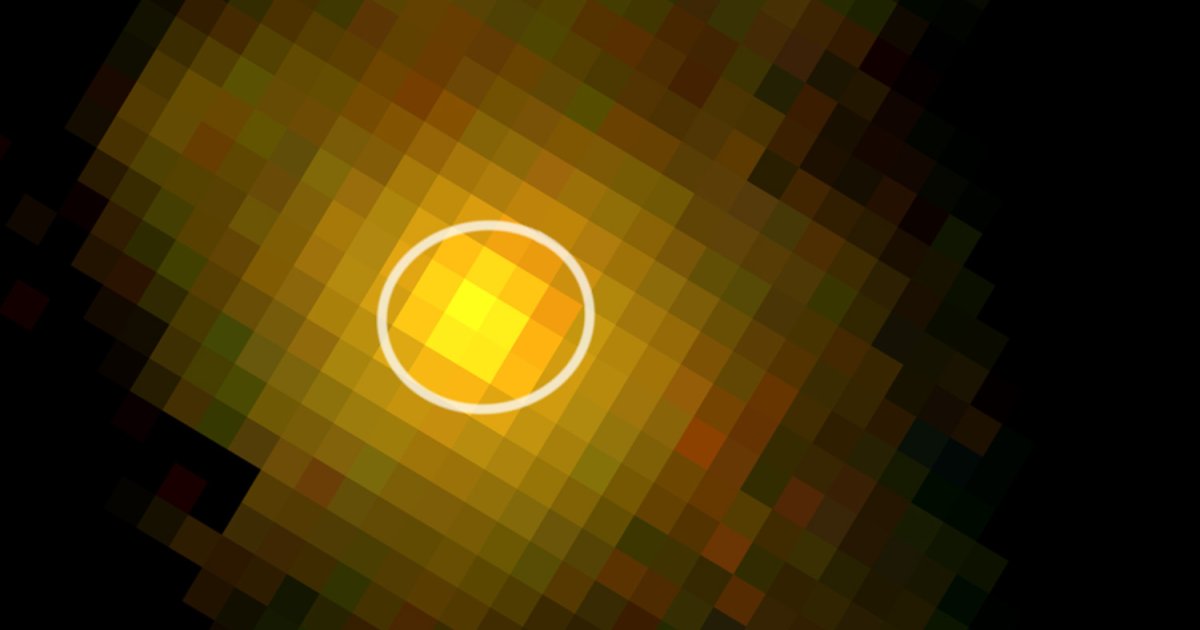
The James Webb Space Telescope (JWST) has provided groundbreaking insights into the early universe with its detailed spectroscopy of XMM-VID1-2075, a massive galaxy that existed less than 2 billion years after the Big Bang. This discovery, highlighted in a study by Forrest et al. published in Nature Astronomy, is part of the UC Davis MAGAZ3NE survey. The findings challenge our understanding of galaxy formation, particularly the development of 'slow rotators' in the early universe.
What JWST Measured
JWST's advanced instruments allowed astronomers to analyze the stellar motions within XMM-VID1-2075. The data revealed that this galaxy is a 'slow rotator,' meaning it lacks the significant rotational motion typically observed in galaxies of similar mass. This characteristic is unusual for a galaxy formed so early in cosmic history, suggesting a different evolutionary path than what current models predict.
Challenges to Galaxy Formation Models
The existence of a massive, non-rotating galaxy like XMM-VID1-2075 so soon after the Big Bang poses a significant challenge to existing galaxy formation models. These models generally predict that large galaxies should acquire angular momentum through gradual mergers and interactions over time. The presence of a slow rotator at such a high redshift implies that alternative processes, possibly involving early, rapid mergers, could play a more significant role than previously thought.
The Single Head-On Merger Hypothesis
One hypothesis to explain the slow rotation of XMM-VID1-2075 is the occurrence of a single, head-on merger. This scenario suggests that the galaxy experienced a direct collision with another massive galaxy, leading to a redistribution of angular momentum that resulted in its current state. Supporting this hypothesis is the observation of excess light off to the side of the galaxy, which could be the remnants of such a merger event.
Implications for High-Redshift Simulations
The discovery of XMM-VID1-2075 has significant implications for high-redshift galaxy simulations. Current models may need to be adjusted to account for the possibility of early, massive mergers leading to the formation of slow rotators. This adjustment could provide a more accurate representation of galaxy evolution in the early universe, offering new insights into the dynamics and interactions that shaped the cosmos.
Conclusion
The JWST's study of XMM-VID1-2075 opens new avenues for understanding galaxy formation and evolution. As scientists continue to analyze data from JWST and other observatories, our models of the early universe will likely evolve, incorporating these surprising findings. For more information, you can read the full article on UC Davis News or explore the details in the ScienceDaily report.