Introduction to the Smile Mission
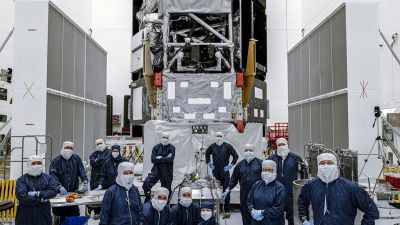
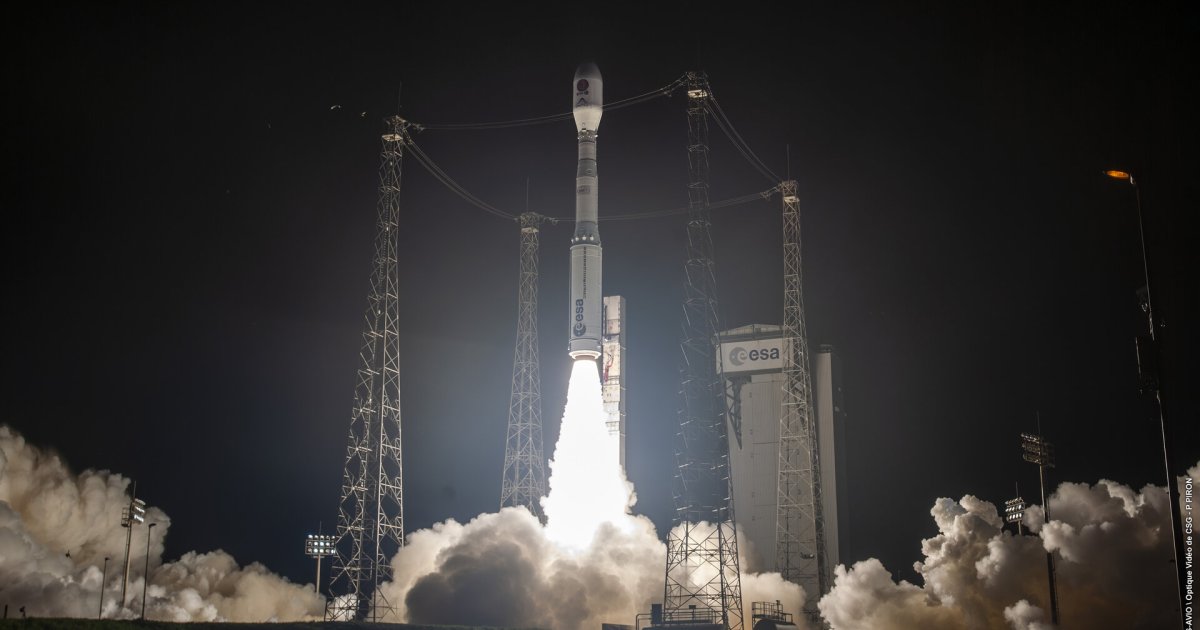
The Solar wind Magnetosphere Ionosphere Link Explorer (Smile) is a collaborative mission between the European Space Agency (ESA) and the Chinese Academy of Sciences (CAS). Scheduled for launch on 19 May 2026 aboard the Vega-C rocket from French Guiana, Smile aims to provide unprecedented insights into the interactions between the solar wind and Earth's magnetosphere. This mission represents a significant partnership between ESA and CAS, focusing on understanding space weather phenomena that can impact satellite operations, communication systems, and power grids on Earth.
The Science Behind Smile
Smile will employ a suite of advanced instruments to achieve its scientific objectives. At the heart of its payload are two key imaging systems: the Soft X-ray Imager (SXI) and the UltraViolet Imager (UVI). These instruments will work in tandem to map the Earth's magnetosphere and auroras, offering a comprehensive view of the dynamic processes occurring in near-Earth space.
Soft X-ray Imager (SXI)
The SXI is designed to capture images of the Earth's magnetosphere in soft X-rays. This capability is crucial because it allows scientists to visualize the boundaries of the magnetosphere, including the magnetopause and bow shock, in real-time. The SXI will detect X-rays emitted when solar wind particles collide with neutral atoms in Earth's exosphere, a process known as solar wind charge exchange. By mapping these interactions, the SXI will provide valuable data on how the magnetosphere responds to solar activity, such as solar flares and coronal mass ejections.
UltraViolet Imager (UVI)
Complementing the SXI, the UVI will observe the auroras in ultraviolet light. Auroras are visible manifestations of the interactions between charged particles from the solar wind and Earth's magnetic field. By capturing UV emissions from auroras, the UVI will help scientists understand the energy transfer processes between the solar wind and the magnetosphere. This information is vital for predicting space weather events that can affect technological systems on Earth.
Advancing Space Weather Science
Space weather refers to the environmental conditions in space as influenced by the Sun and the solar wind. Understanding space weather is critical for mitigating its effects on Earth-based and space-borne technologies. The data collected by Smile will enhance our understanding of the fundamental processes driving space weather, enabling more accurate models and forecasts.
Smile's observations will contribute to a better understanding of how energy and momentum are transferred from the solar wind to the magnetosphere and subsequently to the ionosphere. This knowledge is essential for improving predictions of geomagnetic storms and their potential impacts on power grids, communication networks, and satellite operations.
International Collaboration and Future Prospects
The Smile mission exemplifies the benefits of international collaboration in space exploration. By combining the expertise and resources of ESA and CAS, the mission leverages the strengths of both organizations to address complex scientific questions. This partnership not only enhances the scientific return of the mission but also fosters stronger ties between the European and Chinese scientific communities.
Following its launch, Smile will undergo a commissioning phase, with science operations expected to begin in September 2026. As data starts flowing in, scientists anticipate new insights into the workings of Earth's magnetosphere and the broader implications for space weather science.
For more detailed information on the Smile mission, you can visit the ESA's official page or explore the Smile factsheet.