
Introduction to XMM-VID1-2075
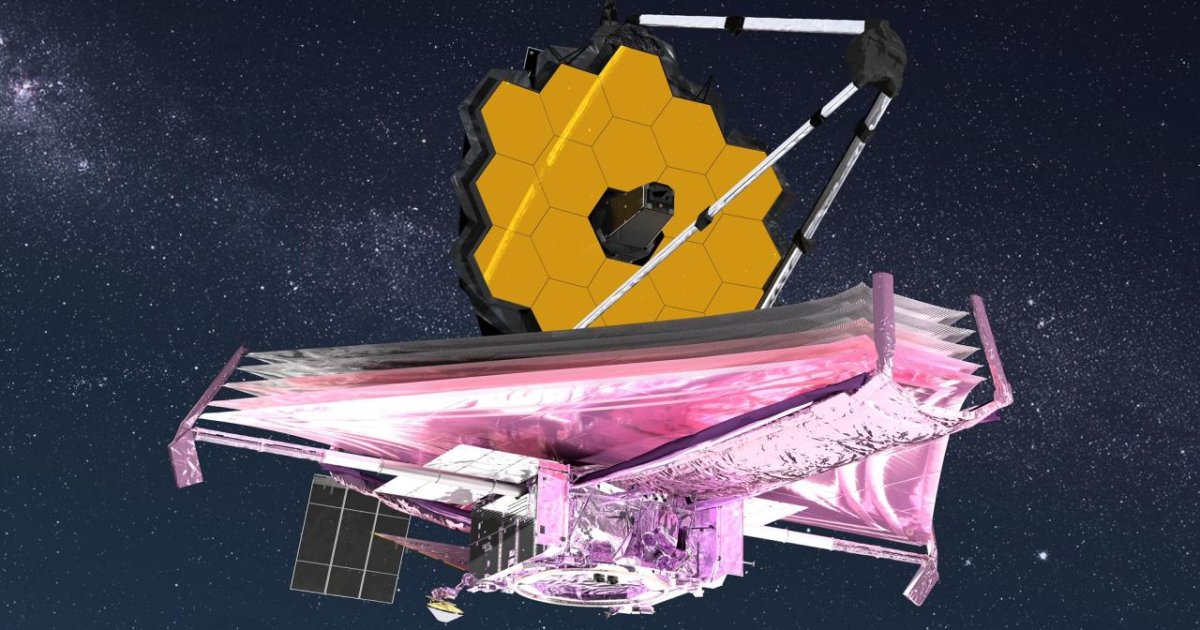
The James Webb Space Telescope (JWST) has once again expanded our understanding of the universe with its Near Infrared Spectrograph (NIRSpec) observations of XMM-VID1-2075. This massive, quiescent galaxy, located at a redshift of z=3.449, exhibits dispersion-dominated kinematics with minimal rotational movement. Such characteristics are typically associated with much older galaxies, making this discovery a fascinating anomaly in the context of galaxy evolution.
NIRSpec's Revelations
Using JWST's advanced capabilities, NIRSpec has provided detailed insights into the kinematic properties of XMM-VID1-2075. The spectrograph measured the galaxy's stellar velocity dispersion, revealing a lack of significant rotational support. This finding is surprising given the galaxy's age, as it formed just 1.8 billion years after the Big Bang. Typically, galaxies from this epoch are expected to be more dynamic and rotationally supported.
According to Forrest et al. 2026 in Nature Astronomy, the velocity dispersion observed in XMM-VID1-2075 suggests that it is a 'dead' galaxy, meaning it has ceased forming stars. The lack of rotation challenges current models of galaxy formation, which predict that early galaxies should exhibit significant rotational dynamics as they evolve from chaotic, star-forming systems into more structured forms.
Implications for Galaxy-Evolution Models
The discovery of a massive, non-rotating galaxy so early in cosmic history poses significant questions for astronomers. Current galaxy-evolution models suggest that galaxies should transition from turbulent, star-forming states to more stable, rotationally supported systems over time. The existence of XMM-VID1-2075, with its dispersion-dominated kinematics, indicates that some galaxies may follow a different evolutionary path.
This finding suggests that the processes leading to the quenching of star formation and the development of kinematic stability may occur much earlier than previously thought. As noted by researchers at UC Davis, understanding these processes could provide new insights into the mechanisms driving galaxy evolution, particularly in the early universe.
Planned Follow-Up Observations
To further investigate this intriguing galaxy, astronomers plan to conduct follow-up observations using both JWST and other ground-based telescopes. These observations will aim to gather more detailed data on the galaxy's stellar populations, chemical composition, and potential interactions with its environment.
Scientists estimate that by examining the distribution of stars and the presence of any surrounding structures, they can better understand the processes that led to the galaxy's current state. Additionally, further spectroscopic studies may reveal whether XMM-VID1-2075 is part of a larger population of similar galaxies or a unique case.
Conclusion
The JWST's NIRSpec observations of XMM-VID1-2075 have opened new avenues for research into galaxy evolution. By challenging existing models, this discovery prompts astronomers to reconsider the timeline and mechanisms of galaxy formation and quenching. As follow-up studies continue, we can anticipate more revelations about the complex history of our universe's earliest galaxies.