Uncovering the Ancient Merger
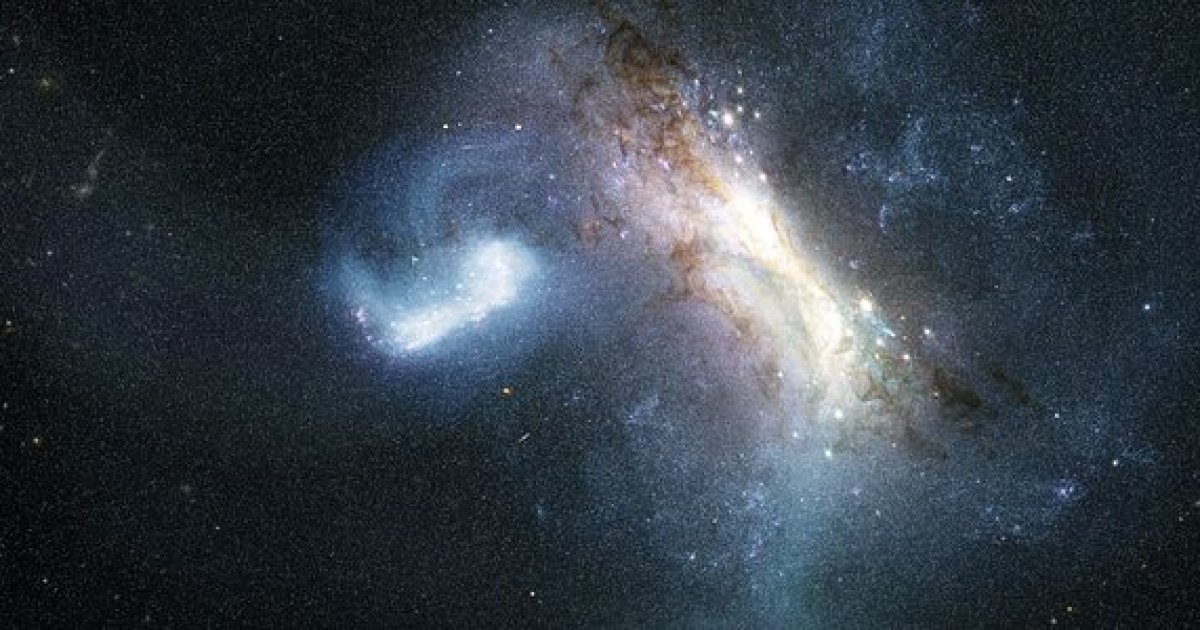
The Hubble Space Telescope has once again provided astronomers with groundbreaking insights into our galaxy's past. A recent study published in Nature Astronomy in August 2026 reveals the discovery of a dwarf galaxy named LKH that merged with the Milky Way approximately 12 billion years ago. This finding is based on the analysis of 39 globular clusters located within the inner 20,000 light-years of our galaxy.
The Role of Globular Clusters
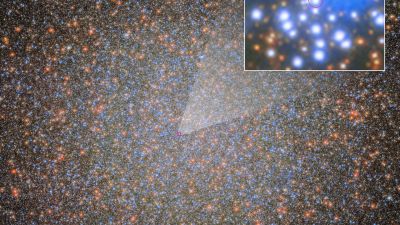
Globular clusters are dense groups of ancient stars that orbit the core of galaxies. These clusters serve as cosmic time capsules, preserving the history of their host galaxy. By studying the orbital dynamics of these clusters, scientists can infer past galactic events, such as mergers with other galaxies. In this case, the peculiar orbits of the 39 globular clusters analyzed by Hubble indicated a significant gravitational disturbance, pointing to a merger event.
Researchers utilized the precise measurements of the clusters' motions and trajectories to trace back their origins. This analysis revealed that the clusters' current orbits could only be explained by the gravitational influence of a massive object, such as a dwarf galaxy, merging with the Milky Way. The evidence suggests that LKH was absorbed into our galaxy around 12 billion years ago, reshaping its structure and star population.
Extending the Timeline of Galactic Mergers
This discovery pushes the known history of the Milky Way's mergers back by about 1.8 billion years. Previously, scientists estimated that the earliest significant merger occurred around 10.2 billion years ago. The identification of LKH as an ancient merger partner offers new insights into the early assembly of the Milky Way, suggesting that our galaxy's growth was more complex and began earlier than previously thought.
Understanding the timeline of these mergers is crucial for constructing accurate models of galaxy formation and evolution. The earlier merger with LKH implies that the Milky Way started accumulating mass and building its structure sooner, impacting the subsequent formation of stars and planetary systems, including our own solar system.
The Significance of LKH in Galactic Assembly
The merger with LKH holds significant implications for our understanding of galaxy assembly. Dwarf galaxies like LKH are believed to be the building blocks of larger galaxies. Their interactions and mergers contribute to the growth and evolution of galaxies over cosmic time. The discovery of LKH highlights the importance of dwarf galaxies in the early stages of galactic development.
Moreover, studying the remnants of such mergers provides valuable information about the chemical composition and star formation history of the Milky Way. By analyzing the stars within the globular clusters associated with LKH, astronomers can gain insights into the types of stars that were prevalent in the early universe and how they contributed to the chemical enrichment of our galaxy.
The Hubble Space Telescope continues to be an indispensable tool in unraveling the mysteries of our cosmic past. Its ability to peer deep into the universe and capture detailed images and data allows scientists to piece together the complex history of the Milky Way and other galaxies. As we uncover more about events like the LKH merger, we gain a deeper understanding of the processes that shaped our galaxy and, by extension, our place in the universe.
For further reading, you can explore more about the Hubble Space Telescope's discoveries on the European Space Agency's Hubble website.