Introduction to LHS 3844 b
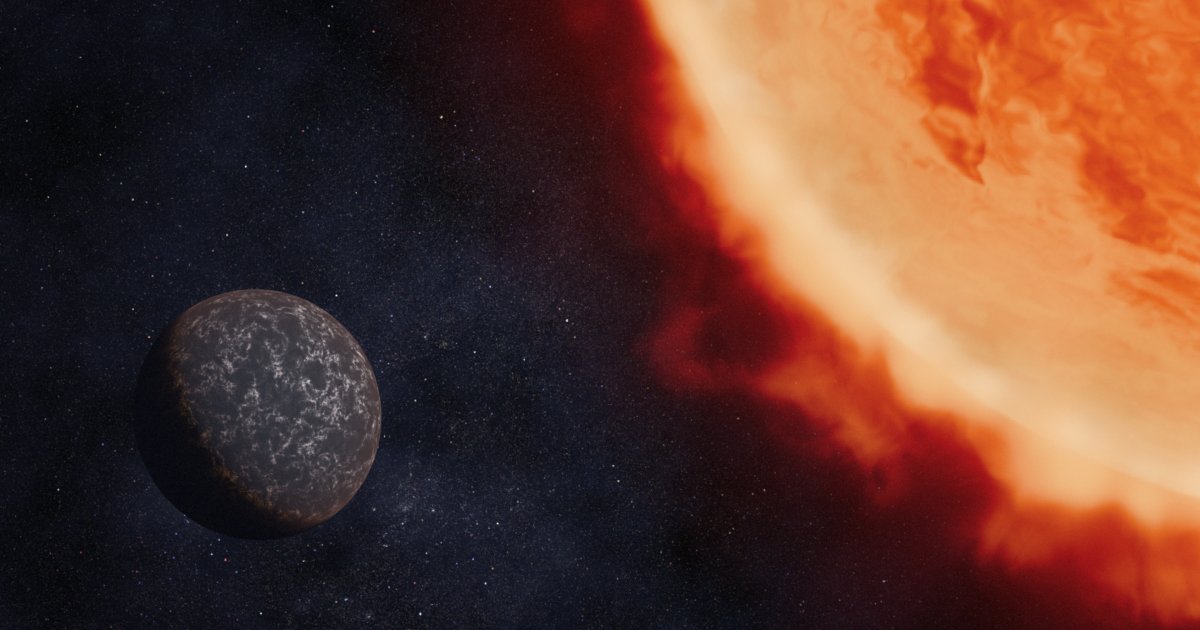
The James Webb Space Telescope (JWST) has achieved a significant milestone by directly observing the surface of LHS 3844 b, a rocky exoplanet located approximately 49 light-years away in the constellation Indus. This super-Earth, which is tidally locked to its red dwarf star, offers a unique opportunity to study the characteristics of rocky planets outside our solar system.
Surface Composition and Atmospheric Insights
Using its Near-Infrared Spectrograph (NIRSpec) and Mid-Infrared Instrument (MIRI), JWST has revealed that LHS 3844 b is a dark, airless world, with a surface likely covered in iron-rich basalt and regolith. This composition is reminiscent of Mercury, suggesting a surface shaped by intense stellar bombardment. The absence of a significant atmosphere on LHS 3844 b provides critical insights into the challenges of atmosphere retention around red dwarf stars. According to NASA, the intense stellar radiation from its host star may have stripped away any primordial atmosphere, leaving behind a barren landscape.
Implications for Atmosphere Retention
Red dwarf stars, known for their volatile stellar activity, pose a significant challenge for atmosphere retention on orbiting planets. The findings from LHS 3844 b suggest that planets in close proximity to these stars may struggle to maintain atmospheres, impacting their potential habitability. Scientists estimate that the high-energy radiation from red dwarfs could lead to atmospheric erosion, making it difficult for planets like LHS 3844 b to support life as we know it.
Advancing Comparative Planetology
The ability to directly observe the surface of LHS 3844 b marks a major advancement in the field of comparative planetology. By studying the infrared spectra of this exoplanet, scientists can draw parallels between LHS 3844 b and rocky planets within our own solar system, such as Mercury and Earth. This comparison helps researchers understand the geological processes that shape rocky worlds and assess their potential for habitability.
Habitability Assessments for Rocky Worlds
While LHS 3844 b itself is not considered habitable due to its lack of atmosphere and extreme surface conditions, the data gathered by JWST provides valuable context for evaluating other rocky exoplanets. By understanding the factors that influence atmosphere retention and surface composition, scientists can better assess the habitability of other planets orbiting red dwarfs. This research is crucial for identifying potential candidates in the search for extraterrestrial life.
Conclusion
The JWST's observation of LHS 3844 b represents a significant leap forward in our understanding of rocky exoplanets and their potential for habitability. By revealing the surface composition and atmospheric conditions of this super-Earth, scientists can refine models of planet formation and evolution, particularly in the challenging environments around red dwarf stars. As JWST continues to explore the cosmos, it will undoubtedly uncover more secrets of the universe, furthering our quest to understand the potential for life beyond Earth.