Introduction to K2-18b and the Significance of Atmospheric Detection
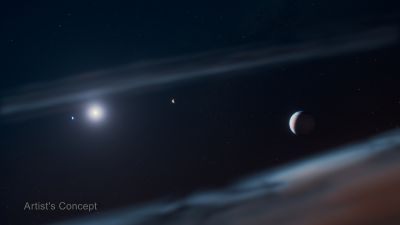
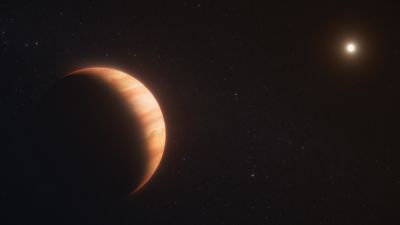
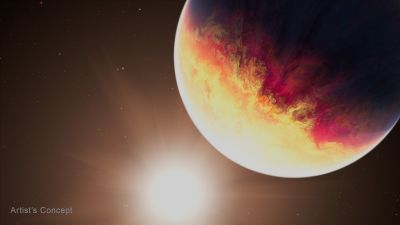
The James Webb Space Telescope (JWST) has made a groundbreaking discovery by detecting methane (CH4) and carbon dioxide (CO2) in the atmosphere of the exoplanet K2-18b. This detection is significant as it adds a new dimension to our search for extraterrestrial life. K2-18b, located about 124 light-years away in the constellation Leo, is classified as a sub-Neptune exoplanet. Its atmosphere's composition could provide clues about potential habitability and the presence of life.
Transmission Spectroscopy: The Method Behind the Discovery
Transmission spectroscopy is the key technique used by JWST to analyze the atmosphere of K2-18b. This method involves observing the starlight that passes through the planet's atmosphere during a transit, which occurs when the planet crosses in front of its host star from our viewpoint. As the starlight filters through the atmospheric gases, certain wavelengths are absorbed, creating a spectrum that reveals the chemical composition of the atmosphere.
JWST, with its advanced infrared capabilities, is particularly suited for this task. It can detect a wide range of molecules, including those that are potential biosignatures, by observing in the infrared spectrum where these gases have distinct absorption features. According to NASA, JWST's sensitivity allows it to detect even small amounts of gases like methane and carbon dioxide, which are crucial for understanding the atmospheric conditions of exoplanets.
The DMS Controversy: A Potential Biosignature?
One of the more intriguing aspects of the K2-18b findings is the potential detection of dimethyl sulfide (DMS), a compound that, on Earth, is primarily produced by biological processes. However, this detection is still under scrutiny, and scientists estimate that further observations are needed to confirm its presence. The potential detection of DMS has sparked a debate within the scientific community because, if confirmed, it could be considered a strong biosignature.
Biosignatures vs. Abiotic Gas Production
The presence of methane and carbon dioxide in K2-18b's atmosphere raises the question of whether these gases are produced by biological or abiotic processes. On Earth, methane is often associated with biological activity, but it can also be produced through geological processes, such as serpentinization. Similarly, carbon dioxide can be released through volcanic activity or other non-biological means.
To differentiate between biosignatures and abiotic gas production, scientists analyze the ratios of these gases and their interaction with other atmospheric components. The presence of certain gases in specific ratios can hint at biological activity, but definitive conclusions require comprehensive data and analysis.
The Hycean World Hypothesis
K2-18b is considered a potential "Hycean world," a term coined to describe exoplanets with hydrogen-rich atmospheres and vast oceanic surfaces. These conditions could create environments suitable for life, even if they differ from Earth-like conditions. The detection of methane and carbon dioxide in K2-18b's atmosphere aligns with the Hycean world hypothesis, suggesting that such planets could be promising targets in the search for extraterrestrial life.
According to the European Space Agency (ESA), the Hycean world concept expands the scope of habitable zones beyond Earth-like planets, considering a wider range of atmospheric compositions and environmental conditions. This discovery could encourage further exploration of similar exoplanets, broadening our understanding of where life might exist in the universe.
Conclusion: A Step Forward in the Search for Life
The detection of methane and carbon dioxide in the atmosphere of K2-18b by JWST marks a significant advancement in exoplanetary science and the search for life beyond Earth. While the potential detection of DMS remains controversial, the findings open new avenues for exploring the habitability of Hycean worlds. Future observations by JWST and other telescopes will be crucial in confirming these results and further investigating the potential for life on K2-18b and similar exoplanets.
For more detailed information, you can explore the official NASA and ESA websites, as well as the Space Telescope Science Institute for updates on JWST's findings.