Unveiling WASP-94A b's Atmospheric Circulation
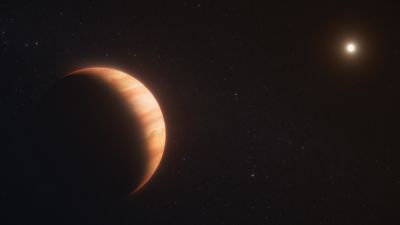
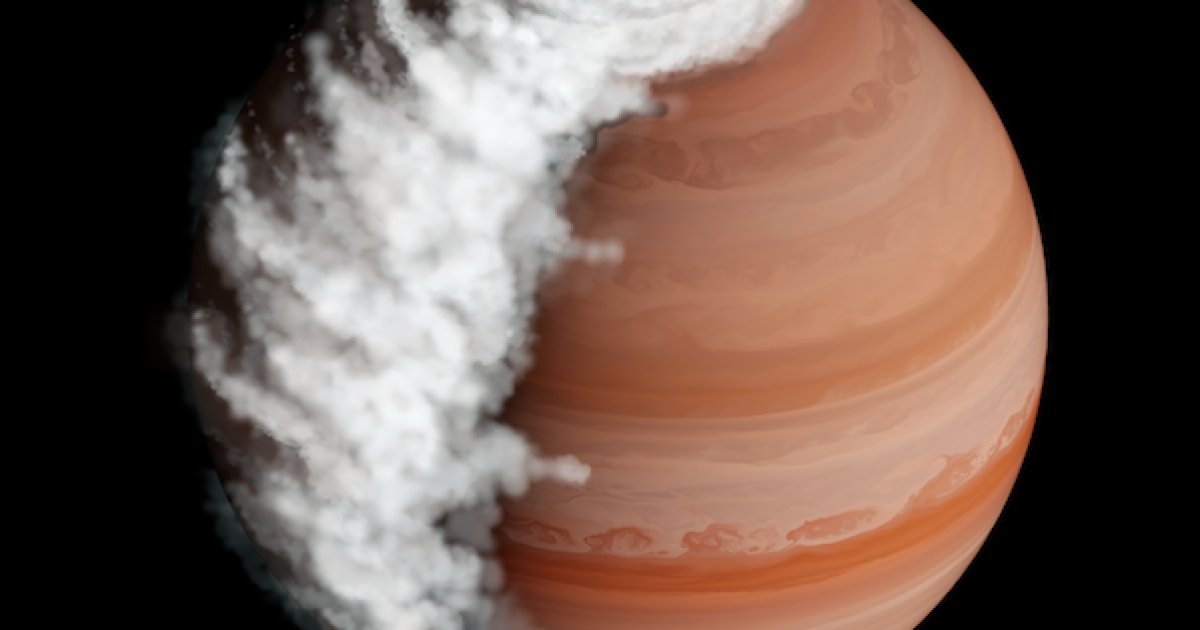
The James Webb Space Telescope (JWST) has made a groundbreaking discovery on the exoplanet WASP-94A b, a hot Jupiter located approximately 700 light-years from Earth. This discovery, announced in May 2026, reveals the presence of mineral clouds composed of magnesium silicate, iron, and magnesium sulfide on the planet's morning side. This marks a significant advancement in our understanding of exoplanetary atmospheres and their complex weather systems.
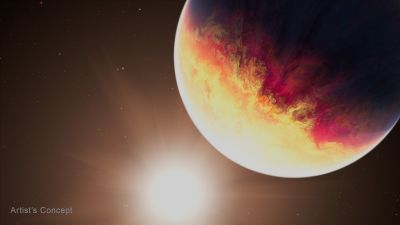
WASP-94A b is a gas giant with extreme temperatures due to its close proximity to its host star. The planet's atmosphere experiences a unique daily weather cycle, where mineral clouds form on the morning side and dissipate by the evening. This phenomenon is driven by the planet's rapid rotation and intense stellar radiation, which create dynamic atmospheric circulation patterns.
The Chemistry of Mineral Clouds
The mineral clouds on WASP-94A b are primarily composed of magnesium silicate, iron, and magnesium sulfide. These materials condense into clouds under the high-temperature conditions present on the planet's day side. Magnesium silicate, commonly found on Earth as olivine and pyroxene, forms in the atmosphere when temperatures exceed 1,000 degrees Celsius. Iron and magnesium sulfide, known for their high melting points, also contribute to the cloud composition.
As the planet rotates, these clouds are carried from the hot day side to the cooler night side. However, the evening side of WASP-94A b remains clear due to the rapid dissipation of clouds as they encounter cooler temperatures. This cycle of cloud formation and dissipation is a fascinating aspect of hot Jupiter atmospheres, offering insights into the complex interplay between temperature, chemistry, and atmospheric dynamics.
Insights from JWST's Spectroscopy
The JWST utilized transmission spectroscopy to analyze the atmosphere of WASP-94A b. This technique involves observing the starlight that passes through the planet's atmosphere during transit. By examining the absorption features in the spectrum, scientists can identify the chemical composition of the clouds and gases present.
The observations revealed distinct spectral signatures corresponding to magnesium silicate, iron, and magnesium sulfide. These findings align with previous theoretical models predicting the presence of mineral clouds on hot Jupiters. The ability to directly observe these clouds provides a more comprehensive understanding of the atmospheric processes at play.
Transmission spectroscopy has proven to be a powerful tool for studying exoplanetary atmospheres, allowing researchers to probe the chemical and physical properties of distant worlds. The JWST's advanced capabilities have opened new avenues for exploring the diverse range of exoplanetary environments and their weather systems.
Implications for Exoplanetary Science
The discovery of mineral clouds on WASP-94A b has significant implications for our understanding of exoplanetary atmospheres. It highlights the complexity and diversity of weather patterns on hot Jupiters, challenging previous assumptions about these distant worlds. The presence of mineral clouds suggests that atmospheric dynamics on hot Jupiters are more intricate than previously thought, with potential impacts on their thermal structure and energy balance.
Furthermore, this discovery underscores the importance of studying exoplanetary atmospheres to gain insights into the formation and evolution of planetary systems. By examining the chemical composition and weather patterns of exoplanets, scientists can better understand the processes that shape planetary environments and their potential habitability.
As the JWST continues to explore the cosmos, it is expected to uncover more secrets about the atmospheres of distant worlds. The study of mineral clouds on WASP-94A b is just the beginning of a new era in exoplanetary science, offering a glimpse into the diverse and dynamic nature of planets beyond our solar system.
For more detailed information, you can read about the discovery on Scientific American or explore the NASA website for further updates on JWST's findings.